
EN
She Hid It for Years—Then a Stranger Revealed Everything at the Wedding

The champagne flute was sweating in my grip as I stood at the edge of the dance floor, watching Sophie sway under the fairy lights. She was laughing, her head tipped back, her husband’s hands steady on her waist. Twenty-three years. I’d fed her, fought for her, watched her claw her way out of a wheelchair and into a life that wasn’t supposed to be hers. Pride sat heavy and warm in my chest.
Then a hand brushed my elbow.
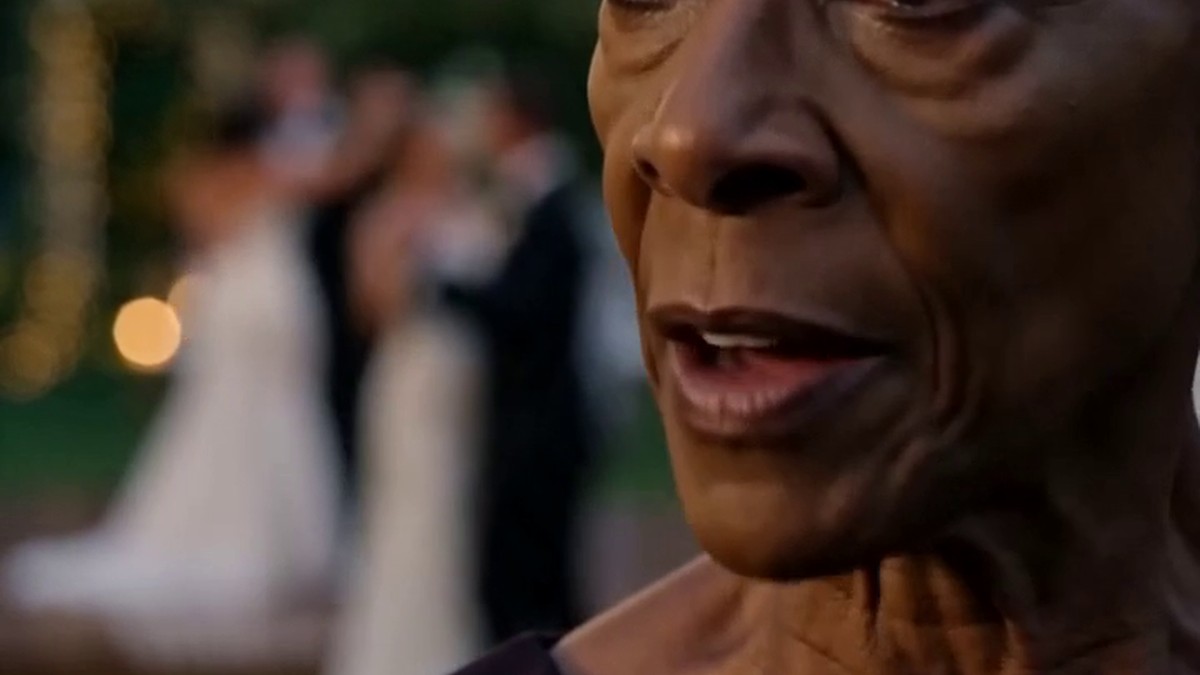
I turned. A woman I didn’t recognize stood too close, her eyes fixed on Sophie with an expression I couldn’t read. She was maybe sixty, gaunt, clutching a small beaded purse like it was the only thing keeping her upright.
“You really have no idea what she’s hiding from you,” she said, quiet and sharp as a blade.
The music kept playing. Sophie kept dancing. Everything else stopped.
I’m Jack Morrison. I’m fifty-five years old, and until that moment, I thought the secrets in my life had been buried long ago. Thirty years back, I learned what it meant to lose everything. One February night, a black ice patch on I-70 outside of Denver, a semi-truck that couldn’t stop. When the state patrol called, the voice on the other end told me my wife, Sarah, and our five-year-old daughter, Emily, were gone. Just like that. I was twenty-five and already a widower, already a father with no child.
For a decade after, I wasn’t alive. I was a man-shaped hole going through the motions. Work, microwave dinners, the drone of late-night television. Emily’s drawings stayed on the refrigerator until the paper yellowed and curled. I couldn’t take them down. The silence in the house was a physical weight, and I carried it because I thought I deserved it. Becoming a dad again never once crossed my mind. That part of me was dead.
Then, at thirty-five, a routine work trip to approve a charity grant put me inside a group home for kids with medical needs. I walked in planning to sign papers and leave within fifteen minutes. The air smelled like antiseptic and crayons. Somewhere, a child laughed; somewhere else, one cried. Ordinary noise, but it hit me like a wave—I hadn’t been around children since the funeral.
While I waited for the director, my gaze drifted down a corridor behind a partition glass. And I saw her.
A tiny girl in a wheelchair, off to the side, a notebook open on her knees. She wasn’t playing with the other kids or calling out for attention. She was just watching them, dark eyes steady and patient, like she’d already learned that people leave. She was five, I learned later. A car crash killed her father and crushed her spine. Her mother walked away soon after, said she couldn’t handle it. The child was alone in every way that mattered.
Our eyes met through the glass. She didn’t flinch. Didn’t smile. Just held my gaze with this quiet, bone-deep expectation that I’d disappear like everyone else.
Something in me didn’t just crack—it dissolved. I didn’t see a diagnosis or a wheelchair. I saw a kid who’d been abandoned, just like I’d been abandoned by life. I started the adoption process the next morning.
I visited her again and again. We talked about books, about the stray cats that roamed the facility’s courtyard, about her drawings—dozens of them, all of houses with one window lit. When I finally brought her home, her whole world fit into a worn backpack, a stuffed rabbit missing one eye, and that notebook. Her name was Sophie.
The first week, she barely spoke. But she watched me constantly, tracking my movements, her little body tense, as if she was waiting for the moment I’d decide she was too much. One night, she called out from her new bedroom: “Dad? Can I have more juice, please?”
I dropped the dish towel and cried right there in the kitchen. From that night on, we were a family.
The years that followed were forged in resilience. Physical therapy, exercises, back braces, setbacks. The first time she stood with crutches, I forgot to breathe. The first time she took three steps unaided, I called my sister and couldn’t speak. School wasn’t easy—kids can be cruel, and her body still carried the memories of the accident—but Sophie refused to be pitied. She grew up stubborn, sharp-witted, fiercely independent. She took up adaptive sports, then coaching. She found a guy named Daniel who looked at her like she’d hung the moon. I lived for her. She was my whole sky.
When she told me she was getting married, I choked on my scrambled eggs and then laughed until I wept.
The wedding was small, held in a garden venue near Golden, string lights crisscrossing above the patio. Sophie’s crutches were draped with white ribbons, and Daniel’s vows nearly dismantled me. I’d never felt so light.
Then the stranger with the beaded purse found me.
She led me away from the crowd, near a trellis thick with climbing roses, and there she confessed. Her name was Lenore. She was Sophie’s biological mother. She told me that Sophie had tracked her down years ago—showed up at her doorstep in Colorado Springs, armed with questions. Wanted to understand why she’d been left, why she wasn’t enough. Wanted to see the woman who’d given up. And she’d done it all without telling me, terrified that knowing would shatter what we had.
Lenore rambled about guilt, about her own cowardice, about how she’d been young and broken and weak. I listened, stone-faced. When she finally paused, I said, “Family isn’t blood. It’s who stays. You didn’t. I did. That’s the whole story.”
She didn’t argue. She just turned and walked away, disappearing between the tables of laughing guests like a ghost who’d never really been there at all.
Later, I found Sophie sitting alone on a bench near the fountain, her dress pooling around her ankles. She started talking before I could ask. She told me about finding Lenore, about the trembling hope that had driven her, about the painful closure she’d gotten. She told me she’d hidden it because she was so afraid I’d think she was ungrateful, that I’d believe our bond was a placeholder for something “real.”
I pulled her close, feeling the faint, familiar tremor of her shoulders—the same girl who’d once checked every night to see if I was still there. “You’re my daughter,” I said into her hair, “not because of any piece of paper, but because we chose each other and walked through hell together. Nothing—nothing—changes that.”
She pulled back, eyes wet. “Thank you for always being there.”
That night, I stood at the edge of the garden and watched her dance again, this time with Daniel’s grandmother, her crutches abandoned by the DJ booth. The fairy lights flickered. Somewhere, a child laughed. For the first time in three decades, I felt something settle deep in my bones. Not loss. Not fear. Peace.
Family isn’t a matter of chromosomes. Sometimes it’s born in the quiet moment when a broken man and a little girl in a wheelchair look at each other and silently agree: *I’m staying.*



Aaronas sakė: „Mama tave mėgsta, tik dar nepažįsta.
Nuo ketvirto aukšto laiptinės, kur stoviu su šluota rankoje, girdžiu beveik visą pokalbį per ventiliacijos groteles – akustika šiame name...


החתול ששמר על הסוד של הזקן
בכל בוקר, כשיורם קדוש רכב על האופניים בשעה שש וחצי לכיוון השוק בשכונת הכרמל בחיפה כדי לפתוח את דוכן הפרחים...


Белята кецове на внука
Белите кецове на Еко Казвам се Даниела и от шестнайсет години продавам балони и пуканки на ъгъла до пешеходната зона...


Örök hiány, Gizi néni kötényében
Nincs rá szép szó, nincs rá helyes mondat. Egyszerűen hiányzol, anyu. Négy éve mondom ezt magamban minden reggel, mióta elmentél....


Un padre, un garage e il silenzio del venticinque ottobre
A Bracciano, sulle rive del lago, c'è una villetta con le persiane verdi che Ettore Bastiani conosce a memoria: ci...


Vrátný z Vinohrad, který znal jeho poslední píseň nazpaměť
Jmenuju se Vojtěch Hrabal a šestnáct let jsem dělal vrátného v domě na Korunní ulici, kde ve čtvrtém patře bydlel...


Лодката „Афродита“ и дванайсетте минути мълчание
Първото, което Богдана Христова забеляза в мен, беше обувките ми. Второто — че не си направих труд да ги обясня....


המכתב שלא נשלח לרחוב הירקון
שלום, אמא. זאת אני. יעל כתבה את זה בשתיים ושבע עשרה בלילה, על המחברת הישנה שאמא השאירה במגירת המטבח ברחוב...