
EN
The Note She’d Prepared to Leave Behind

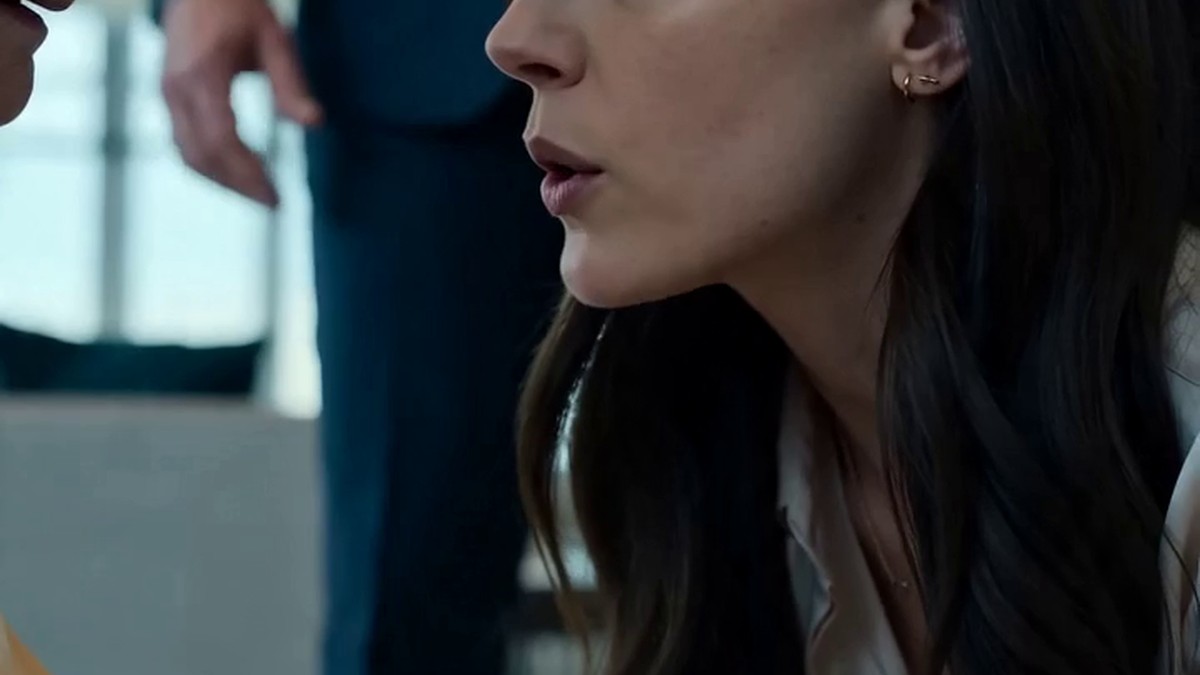
The lobby was alive with the ordinary chaos of a busy hotel. Business travelers wheeled their luggage across the marble floor. Tourists clustered near the concierge desk, unfolding maps, pointing at brochures. Staff moved in quiet, practiced efficiency — adjusting, resetting, smiling on cue.
Then everything stopped.
An eighty-one-year-old woman seized the wrist of a passing waitress and would not let go.
"Help me."
The words came out barely louder than breath. Cracked. Frightened. The kind of sound that cuts through noise the way a knife cuts through silk — without effort, without warning.
The entire lobby went still.
Clara — the waitress — didn't hesitate. She dropped to one knee right there on the polished floor, her tray still in her other hand, and looked directly into the old woman's eyes. Not past her. Not through her. *At* her.
Then the sons arrived.
There were two of them, and they moved fast. Too fast. The kind of speed that isn't concern — it's containment.
"She doesn't know what she's saying," the older one said immediately, his voice smooth and rehearsed, the way a line sounds when it's been practiced.
But the woman shook her head. Slowly. Deliberately. As if she'd been waiting for exactly this moment to use what little strength she had left.
"Yes, I do."
Tears broke free and tracked down the deep creases of her face. She didn't wipe them away. She held Clara's gaze instead, as if letting go — even for a second — would cost her everything.
Clara set down her tray.
Near the elevator bank, a man in a dark suit shifted his weight. He was holding a thick manila folder pressed tight against his side, the kind of folder that contains documents you don't want other people reading. When the old woman's eyes drifted in his direction, he looked away. Found something fascinating on the far wall.
Clara noticed.
The hotel manager, who had appeared silently at the edge of the scene, noticed too.
Then the old woman did something no one expected. With one trembling hand, she pointed. Not at her sons. Not at Clara.
At the folder.
"They want me to sign."
The words landed like stones dropped into still water. Nobody spoke. Nobody moved. The attorney near the elevator didn't raise his head.
The sons started talking over each other — reassurances, explanations, a sudden cascade of words designed to fill the silence before anyone could think too clearly about what they'd just heard.
Clara didn't move.
She stayed kneeled on that marble floor, one hand still in the old woman's grip, and she looked up at the sons with an expression that required no words. She was not going anywhere. She was not going to let this woman be swept away by urgency and impatience and the sheer social pressure of two large men and a man with a briefcase who clearly wanted this moment to end.
The hotel manager stepped forward and quietly suggested that perhaps the lady needed somewhere to sit. Somewhere comfortable. The sons began to object, but the manager was already guiding the group toward a cluster of armchairs near the window, calling for water, calling for a blanket, his voice calm in the way that people with real authority don't need to raise their voices.
Within minutes, the old woman was settled into a wide chair with a cream-colored blanket across her lap and a glass of water on the table beside her. Winter light fell through the tall windows and lay across her hands.
The sons stood at a distance, heads bent together, whispering in low, sharp tones. The attorney sat in a chair he'd chosen for maximum visibility, his folder now resting on his knee, watching.
Clara pulled up a footstool and sat beside her.
"Take your time," she said. That was all.
The old woman looked out the window for a long moment. Then she reached into her purse. The movement was slow and deliberate — not because she was feeble, but because it mattered. She moved the way people move when they're retrieving something precious.
She drew out a folded piece of paper.
It was worn at the creases. Soft with handling. The kind of paper that's been unfolded and refolded many times, each time put away again, each time not yet the right moment.
She held it for a second with both hands. Then she placed it in Clara's palms and looked at her with eyes that had stopped crying and started waiting.
"I wrote this before I left home this morning."
Clara looked down. The envelope was sealed. Across the front, in handwriting that shook but did not waver — the kind of script that belongs to someone who was once taught to write beautifully and still tried — were a few words.
She read them.
And understood that this woman hadn't written the note just in case something went wrong today.
She'd written it because she knew something would.
Clara raised her eyes. "Who else knows about this?"
"No one," the woman said. "I couldn't trust anyone. My own attorney —" she glanced across the room — "he drafted those papers. My sons retained him. Not me."
The pieces clicked into place. The house. The folder. The speed of the sons' arrival. The attorney's careful distance.
"What's in the documents?" Clara asked quietly.
"Power of attorney," she said. "Full. Irrevocable. Over everything." She paused. "The house has been in my family for sixty-three years. My husband built it. I raised my children in it. They want me to sign it over today — told me it was estate planning. Told me it would protect me." Her voice didn't break. It hardened. "But I read everything before I came. I am not confused. I am not forgetting things. I am eighty-one years old and I know exactly what irrevocable means."
Clara stood up.
She walked across the lobby toward the attorney with a steadiness that made several bystanders step back without knowing why. She stopped in front of him.
"I need to see your bar registration number," she said.
He blinked. "Excuse me?"
"Your bar registration. The state requires it on all documents you draft for clients." She held out her hand. "Or I can call the front desk and ask them to contact the state bar office while we wait."
The older son stepped forward. "This is completely inappropriate. She's a waitress —"
"She's a person who asked for help," Clara said, without looking at him. "I'm helping her."
The manager appeared again at Clara's shoulder. He had a phone in his hand.
The attorney opened his folder. His hands, Clara noted, were not entirely steady.
"The woman who retained you," Clara said, "is sitting by that window. She did not retain you — her sons did. Which means your fiduciary duty is unclear at best and legally compromised at worst. You know that. I think you knew that when you walked in here."
The lobby had quietly filled with witnesses. No one had left. A woman near the gift shop had her phone out. Two business travelers had stopped pretending to look at their own phones.
The attorney closed the folder.
"We'll reschedule," he said. To the sons, not to Clara. He stood, straightened his jacket, and walked to the elevator without looking at the old woman by the window.
One son lunged after him, then stopped. Looked at the room. At the phone. At the manager. At Clara standing in the middle of it all.
He looked, finally, at his mother.
She was watching him. Her hands folded in her lap. The blanket around her shoulders. Her eyes clear and steady and unutterably sad — the look of a woman who had hoped, for a long time, that she was wrong about the people she loved most.
She hadn't been wrong.
Nobody moved for a long moment.
Then she turned back to Clara and held out her hand. Clara crossed the lobby and took it.
"There's a number on that note," the old woman said quietly. "My youngest daughter. She lives in Portland. We haven't spoken in two years — my sons told me she'd stopped calling." She paused. "I'd like to call her now, if that's all right."
Clara already had her phone out.
The daughter answered on the second ring.
The old woman closed her eyes when she heard her voice. The lobby noise — the carts, the distant music, the hum of a building full of people going somewhere — faded into something that felt, for just a moment, like silence.
"It's Mom," she said. "I'm coming home."



Aaronas sakė: „Mama tave mėgsta, tik dar nepažįsta.
Nuo ketvirto aukšto laiptinės, kur stoviu su šluota rankoje, girdžiu beveik visą pokalbį per ventiliacijos groteles – akustika šiame name...


החתול ששמר על הסוד של הזקן
בכל בוקר, כשיורם קדוש רכב על האופניים בשעה שש וחצי לכיוון השוק בשכונת הכרמל בחיפה כדי לפתוח את דוכן הפרחים...


Белята кецове на внука
Белите кецове на Еко Казвам се Даниела и от шестнайсет години продавам балони и пуканки на ъгъла до пешеходната зона...


Örök hiány, Gizi néni kötényében
Nincs rá szép szó, nincs rá helyes mondat. Egyszerűen hiányzol, anyu. Négy éve mondom ezt magamban minden reggel, mióta elmentél....


Un padre, un garage e il silenzio del venticinque ottobre
A Bracciano, sulle rive del lago, c'è una villetta con le persiane verdi che Ettore Bastiani conosce a memoria: ci...


Vrátný z Vinohrad, který znal jeho poslední píseň nazpaměť
Jmenuju se Vojtěch Hrabal a šestnáct let jsem dělal vrátného v domě na Korunní ulici, kde ve čtvrtém patře bydlel...


Лодката „Афродита“ и дванайсетте минути мълчание
Първото, което Богдана Христова забеляза в мен, беше обувките ми. Второто — че не си направих труд да ги обясня....


המכתב שלא נשלח לרחוב הירקון
שלום, אמא. זאת אני. יעל כתבה את זה בשתיים ושבע עשרה בלילה, על המחברת הישנה שאמא השאירה במגירת המטבח ברחוב...