
EN
Silent Ember: The Boy Who Wouldn’t Let Her Sit Out

The chandeliers at the Magnolia Grand in Savannah threw gold light across three hundred faces, but Margaret Doyle only had eyes for the empty square of parquet in front of her. She'd worn a midnight-blue dress with long sleeves specifically because it covered her arms, which had grown thin from eight years of sitting instead of standing. Tonight was the Carver Children's Hospital benefit, the one event she never missed, the one where she wrote a check large enough to matter and then sat near the back exit, close enough to leave early.
She'd been a dancer once. Not professionally — she'd taught ballroom at a little studio off Bull Street for eleven years, two nights a week, mostly retirees and nervous grooms learning their first dance before a wedding. Then the car accident on I-16 took that from her along with the use of her legs, and in the eight years since, nobody had asked her to dance. Not her nephew at his wedding, not the volunteer coordinator who ran the gala, not a single man in this room full of men in good suits. They offered her water, offered to get her a plate, offered to wheel her closer to the air conditioning. Nobody offered her a hand.
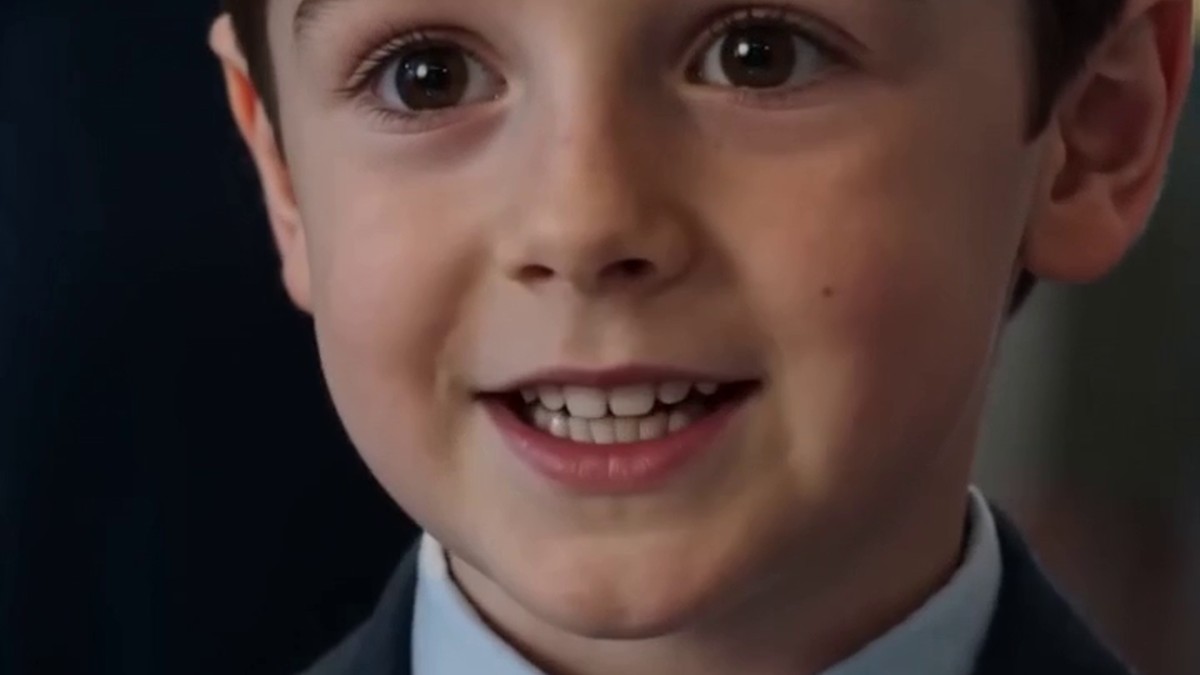
The orchestra was midway through something slow when the side door near the kitchen opened and a boy walked in. He couldn't have been older than seven, in a button-down shirt a size too big and sneakers that had clearly been white once. Nobody stopped him. He walked past the servers with their trays, past a cluster of board members, straight toward Margaret's table like he already knew where he was going.
He stopped in front of her wheelchair and held out his hand.
"Will you dance with me?"
A woman at the next table — Margaret didn't know her, someone's wife, someone's donor — let out a short, startled laugh, the kind people make when they don't know what else to do. A man leaned down toward the boy, hand already reaching to steer him away.
"Buddy, hold on — she can't—"
"She can if I help," the boy said. He didn't say it like he was arguing. He said it like he was reading off a label. "My grandma broke her hip and she still dances in her kitchen. She just holds the counter."
"Sweetheart," Margaret started, "I don't think—"
"I'll hold your hand instead of the counter," he said, and that was the whole negotiation. He didn't look at the chair like it was a wall. He looked at her hand like it was simply the next thing that needed holding.
She took it. Her fingers were cold; his weren't.
What he did next wasn't what anyone expected. He didn't try to pull her up, didn't make some clumsy gesture toward standing. He stepped sideways, planted his small worn sneakers on either side of her footrest, and climbed up, one knee catching on the armrest so he nearly toppled before she caught his elbow, until he was sitting across her lap, facing her, arms looping around her neck like he was climbing a jungle gym and she happened to be the top bar. Then he turned and hollered over her shoulder at the orchestra, loud enough that two waiters stopped mid-stride: "Can you play something we can dance to from here?"
The bandleader, an older man named Curtis Webb who'd been playing Savannah weddings for thirty years, caught Margaret's eye. She gave the smallest nod, more a tremor than a gesture. He lifted his trumpet and the band slid into something slow and warm, and Margaret gripped the wheel rims — her palms slick, the rubber catching unevenly on one side where the tire had gone slightly soft — and began to turn her chair in a careful circle. The boy's knee dug into her thigh. His hair smelled like chlorine, like he'd come straight from somewhere with a pool.
The room, which had gone quiet out of discomfort, went quiet again for a different reason. Three hundred people watched a woman turn herself in slow circles using the only instrument she had left — two wheels and her own two arms — while a seven-year-old stranger hung on and hummed off-key, badly, a half-beat behind the trumpet.
By the second turn, people were standing. Not clapping yet. Just standing, the way you stand when you've stopped chewing your food.
When the song ended, Margaret's chair rolled a few inches too far and bumped the edge of a table leg, rattling the glasses on it. Nobody seemed to notice but her. She wiped her face with the back of her wrist — no tissue, no grace to it — and asked the boy his name.
"Dylan," he said. "Dylan Pruitt. My mom works in the kitchen tonight. I wasn't supposed to come out here, she's gonna kill me."
That was how Margaret learned the rest of it — not from Dylan, who'd already wriggled down and run off toward the dessert table like nothing extraordinary had happened, but from the hospital's events coordinator, Renata Fields, who found Margaret a few minutes later still catching her breath.
Dylan's mother, Carla Pruitt, worked catering shifts through an agency the hospital contracted for events like this one. Eighteen months ago, Dylan had spent eleven weeks on the pediatric oncology floor at Carver — the same hospital Margaret's check tonight was meant to help keep running. Carla had mentioned once, in passing, that Dylan came out of that hospital stay saying some of the kids on his floor couldn't walk either, for a while, and the nurses never once told them not to try.
Margaret asked Renata where Carla was. Renata pointed toward the kitchen doors.
Margaret wheeled herself there and found Carla restocking a tray of bacon-wrapped dates, sweat darkening the hairline under her hairnet, visibly bracing for a complaint about her son interrupting the gala.
"Your son didn't interrupt anything," Margaret said before Carla could get a word out. "He gave me something back I thought I'd lost for good."
Carla set the tray down too fast; a date rolled off the edge and onto the floor, and she didn't pick it up. "He does that. Ever since Carver. I don't know where he gets it."
Margaret didn't say anything grand in that moment. She didn't make a speech. She asked if there was a pen anywhere back there, and Carla handed her a grease pencil from the prep counter because it was the only thing within reach.
Three days later, Margaret sat at the walnut desk in her Ardsley Park home, the one she hadn't bothered dusting properly in years because no one visited who cared, and she opened a folder she'd kept closed since the accident — the paperwork for the dance studio she'd shut down, the one with her name still on the deed to the small building on Bull Street, empty for eight years, paying taxes on a room nobody used.
She called her lawyer, a woman named Diane Oshiro who'd handled Margaret's affairs since the accident settlement. "I want to put the studio in a trust," Margaret told her. "Scholarship fund. Full name's going to be the Dylan Pruitt Movement Fund — dance and adaptive therapy, free for any kid coming off a long hospital stay at Carver. I want the building reopened by spring."
"That building's worth close to two hundred and ten thousand dollars, Margaret. You sure?"
"I've been sure for eight years. I just didn't have a reason to say it out loud until Saturday."
She signed the trust documents herself, in blue ink, without anyone holding her hand. Diane filed the paperwork with the county the following Tuesday.
Carla found out two weeks later, not from Margaret directly, but from a letter that arrived at her apartment — Dylan's name printed at the top of hospital foundation letterhead, informing her that a scholarship fund had been established in her son's name, and that free adaptive dance classes would begin at a renovated studio on Bull Street that March, with Carla and Dylan as the first family invited, no cost, ever.
Carla called the number on the letter with her hands shaking too badly to dial twice. Margaret picked up on the second ring.
"You didn't have to do this," Carla said.
"I didn't do it for you," Margaret said. "I did it because your son asked me a question nobody else had the nerve to ask in eight years. I'm just paying the question back."
The studio reopened on a cold Saturday morning in March. The mirrors Margaret had kept covered with sheets for eight years were finally uncovered, still smudged in one corner where a mover's thumb had left a print nobody wiped off. The place still smelled faintly of fresh paint over old varnish. One of the folding chairs by the door had a wobbly leg that someone had jammed a folded napkin under.
Dylan showed up in the same sneakers, now one size too small, toes pressing against the canvas. He parked himself at the barre next to Margaret's chair, bounced on his heels twice, and tugged on her sleeve.
"Can we do the spinning thing again? But can I pick the song this time?"
"What song," Margaret said.
"I don't know yet. Something with drums."
Carla, standing by the door with her coat still on, laughed — a real one, loud enough that it startled the pigeon that had gotten in through the propped door and sent it flapping toward the rafters.



Dalia ir šašlikas Nemuno pakrantėje
— Duok čia. Darius greitai, beveik nerūpestingai priėjo prie jos ir išplėšė iešmą iš rankų. Tiesiog išplėšė, o ne paprašė....


היומן הכחול שתחת הצלחת
הבושה שלי התחילה עוד לפני שהספקתי להניח את מגש העוגיות שלי על שולחן הקינוחים. התעוררתי בחמש בבוקר כדי להכין אותן...


Le fauteuil roulant de mon grand-père au bal de promo
Je m'appelle Camille, j'ai dix-huit ans, et je viens de Nevers. Pour comprendre ce qui s'est passé au gymnase du...


הכרית של ולריה ושלוש המילים שהרסו את יואב שפירא
המסדרון בווילה בהרצליה פיתוח היה שקט. לא שקט רגיל – שקט כבד, מהסוג שמבשר שמשהו עומד להתפוצץ. נועה ישבה על...


Il patto da trecentomila euro al Grand Hotel Majestic
Giulia Ferretti teneva il bicchiere di prosecco in mano senza bere da almeno venti minuti. Attorno a lei, sulla terrazza...


Le domaine qui portait son nom
Léa Fontaine avait vingt-huit ans et travaillait depuis trois ans comme directrice d'exploitation pour un domaine viticole familial, dans les...


The Casserole Dish
Mark Dalton pulled into the driveway at 10:04 PM, the dashboard clock glowing green in the dark. Thirteen hours at...


Dziewczynka, czarny ogier i dom pod Wrocławiem, którego nikt nie miał odnaleźć
Sala balowa w Pałacu Krasickich pod Wrocławiem ucichła, kiedy Dominik Werner, właściciel sieci hoteli i stadniny pokazowej, wskazał ręką na...