
EN
Mom, Please, The Dress Is Mine

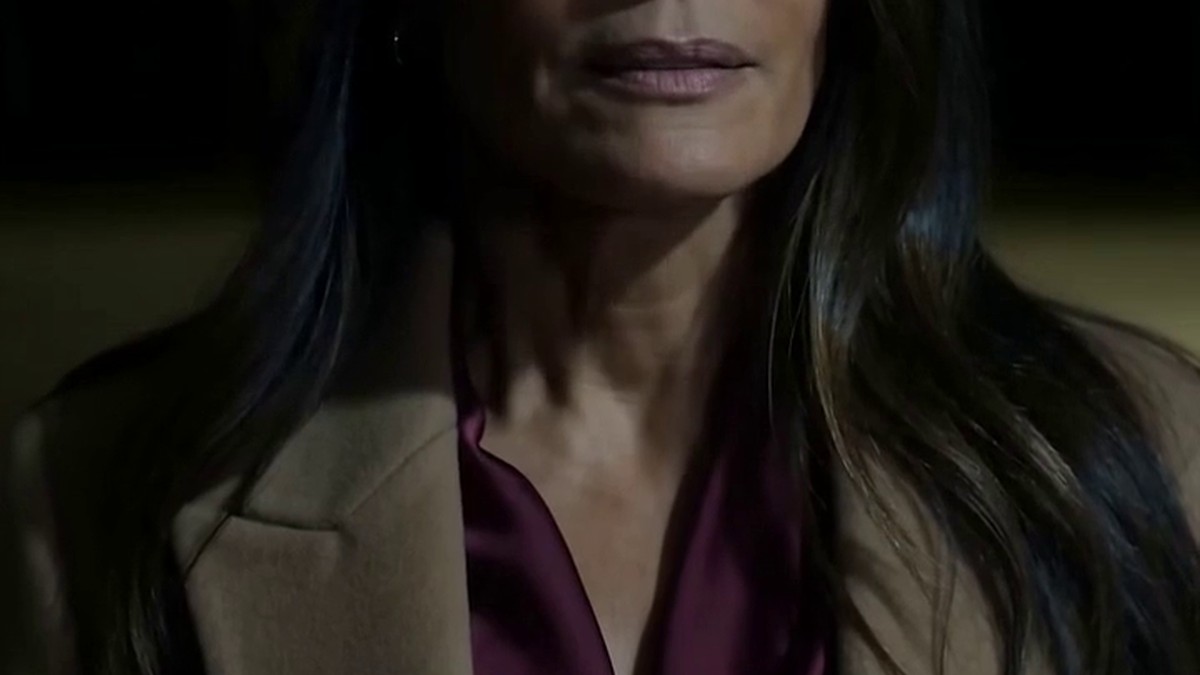
The invitation came on a Tuesday, heavy cream paper, the kind that costs more than a week of groceries. It was addressed to both of us. My husband, Daniel, was in Frankfurt closing a deal on some logistics merger, so he wasn’t going to be the one opening it.
I almost threw it in the recycling. Daniel hated those things — the charity galas, the auctions, the rubber-chicken dinners where men in five-thousand-dollar suits stood around talking about golf handicaps and offshore accounts. He always said if he wanted to hear rich people lie to each other, he’d go back to his first divorce hearing.
But he texted me from the airport.
“Wear the burgundy one. You never wear it.”
I stared at my phone.
The burgundy one. He remembered the dress. The one I bought three years ago for a friend’s wedding in Austin, the one with the low back and the slit that made my mother tell me I looked like I was “advertising something.”
“Since when do you care what I wear to these things?” I wrote back.
“Since you said I never notice. Go. Pretend you’re above it. You’re good at that.”
I laughed despite myself. He knew exactly which buttons to push.
The event was at the Glass House on Pier 17, some overpriced venue downtown where the floor-to-ceiling windows look out over the harbor. I parked my eighteen-year-old Toyota between a Range Rover and a Tesla, and the valet looked at me like I’d rolled in on a lawnmower.
Inside, the air smelled like five-hundred-dollar candles and privilege. Women floated past in dresses that looked like they’d been sewn onto them by teams of assistants. Men wore tuxedos with that easy, practiced slouch — the kind of posture you get from a lifetime of being told you belong everywhere.
I found my name on a little card at the registration table. Maya Kessler. Plus one. Daniel’s name crossed out in fountain pen.
“Mrs. Kessler.” The woman at the table didn’t look up. “The Warren Foundation is delighted you could attend. Mr. Warren asked me to make sure you were seated at his table.”
That stopped me.
“Conrad Warren?”
“Of course.”
I felt the first prickle of something at the back of my neck.
Conrad Warren was Daniel’s old business partner. They’d started a consulting firm together ten years ago, then split when Daniel wanted to go independent. The split was not amicable. Daniel referred to Conrad only as “that son of a bitch” or sometimes “the reason my stomach lining is gone.”
I hadn’t seen the man in six years.
But I kept my face neutral, accepted the little embossed place card, and walked toward the main hall. The dress I wore was, in fact, the burgundy one — deep wine-colored silk, simple lines, not a single bead or sequin. I had curled my hair with a hotel iron and worn my grandmother’s pearl studs. I looked fine.
I did not look like these women.
They shimmered. They sparkled. They moved through the room like satellites, each one trailing perfume that probably cost more than my car. I saw one woman wearing what had to be a quarter-million dollars in jewelry and thought: that’s a down payment on a house in Seattle.
I ordered a sparkling water and stood by the window, looking at the yacht moored beyond the glass. The Aurelia. Forty-two meters. White as a lie.
“It’s gorgeous, isn’t it?”
I turned.
The woman beside me was probably sixty, but preserved in the way that only money and a team of aestheticians can manage. Silver-blonde hair in a sleek bob. Pearls as big as marbles. A silver gown that shifted like liquid when she moved.
“I’m Celeste Warren,” she said. “You must be Maya.”
“I am.”
She extended her hand. Her grip was cold and brief, the kind of handshake that tells you the other person has already decided exactly how much time you’re worth.
“I’ve heard so much about you,” she said.
“All good things, I hope.”
She smiled, and there was no warmth in it at all.
“Daniel always did have… unconventional taste.”
I let that sit for a second. Then I smiled back.
“That’s one word for it.”
Her eyes flicked down to my dress. Not subtle. A full, deliberate inventory, from collar to hem, like a bailiff cataloguing evidence.
“It’s lovely,” she said. “Vintage?”
“No,” I said. “Just mine. Bought it for a wedding a few years back.”
She tilted her head. “How brave of you to wear it again.”
I took a small sip of my water. “I don’t think it takes courage to wear a dress twice, Mrs. Warren. It takes common sense. The thing cost four hundred dollars. I’ll be getting my money’s worth until the seams give out.”
Her mouth tightened, just for a heartbeat. Then the smile came back, polished and bright as the champagne tower in the center of the room.
“Four hundred,” she repeated. “How… practical.”
“I’m a practical person.”
“I’m sure that’s what attracted Daniel.” She picked up a flute of champagne from a passing tray. “He was always so impressed by frugality.”
The way she said *frugality* made it sound like a childhood illness.
I took another sip of water. “Actually, Mrs. Warren, I think what attracted Daniel was that I didn’t care about any of this.”
I gestured vaguely at the room — the gowns, the diamonds, the yacht, the whole floating circus.
Her smile didn’t falter. “And yet here you are.”
“Invitation said both of us. He’s in Germany. I’m the understudy.”
“The what?”
“Understudy,” I said. “When someone gets sick, the second-string actor goes on. I’m standing in for Daniel.”
She gave a tiny, elegant shrug. “I don’t go to the theater. Too many people in rental tuxedos.”
I laughed — a real one, because that was actually funny.
She didn’t laugh with me.
That’s when I saw him. Conrad Warren. Standing across the room with a circle of men. Tall, tan, silver at the temples, wearing a tuxedo that looked like it had been painted on. He glanced over, saw me next to his wife, and his face flickered. For half a second, he looked like a man watching someone open a door he expected to stay locked.
Then the smile came on, wide and easy, and he excused himself from his group and crossed the room toward us.
“Maya.” He took my hand in both of his. “My God. You look wonderful.”
“Conrad.”
“How long has it been? Five years? Six?”
“Six.”
“Too long.” He turned to his wife. “Darling, you’ve met Maya. Isn’t she something?”
Celeste took a delicate sip of champagne. “She certainly is.”
“Daniel sends his apologies,” I said. “Stuck in Frankfurt.”
“Of course,” Conrad said. “Business never sleeps. Speaking of which — could I borrow you for a moment, Maya? There’s something I’d like to show you.”
It wasn’t a question.
Celeste gave me a look I couldn’t quite read — satisfaction, maybe, or warning. Then she drifted off toward a group of women, calling one of them by a nickname I didn’t catch.
Conrad led me to a corner near the floor-to-ceiling windows. The noise of the party faded to a dull roar.
“How’s Daniel?” he asked.
“Good. Busy.”
“Still running that little shop of his?”
He meant the consulting firm. The one that had grown from three employees to forty because Daniel had built it with his own hands while Conrad was busy pretending to be a Warren.
“He likes it,” I said.
Conrad nodded. “Good. Good for him.”
There was a pause. He looked out at the yacht, then back at me.
“I imagine you’re wondering what you’re doing here.”
“The thought crossed my mind.”
“I wanted to offer you something,” he said. “A gesture. To put the past to bed.”
I waited.
He reached into his jacket and pulled out a folded envelope. Not the expensive stationery kind. This was a standard white business envelope, the kind you buy at Office Depot.
“What’s that?”
“Sixteen years,” he said. “That’s how long it’s been since Daniel and I started together. And about eleven since I made the worst call of my professional life. You know what I’m talking about.”
I did. The buyout. Conrad had forced Daniel out of the original company with a non-compete and a payout that was somewhere between insult and highway robbery. Daniel had signed because he didn’t have the stomach for a fight. He’d started over. It had taken him years to stop waking up at four in the morning, staring at the ceiling.
“I’ve thought a lot about that year,” Conrad said. “And I want to make it right. Quietly. Without lawyers.”
He held out the envelope.
I didn’t take it.
“Make it right how?”
“There’s a check in here.” He lowered his voice. “One million dollars. Call it a settlement. Or a correction. Whatever you want to call it. It’s yours. Both of yours.”
I stared at the envelope.
Then I looked at him.
“And in exchange?”
“Exchange?”
“Conrad.” I folded my arms. “I’ve watched this routine for six years. Daniel’s told me enough about you to know you don’t hand out money to feel better. So what is it? What do you want?”
He didn’t even have the grace to look embarrassed.
“There’s a board meeting next month. The foundation is considering a new CFO. A name has come up. Someone Daniel used to work with. I want Daniel to make a call. Just a conversation. A recommendation.”
I felt the cold spread through me.
“You want to buy my husband’s influence for a million dollars.”
“I want to make a legitimate connection,” he said. “That’s what business is, Maya. Connections.”
“No, that’s what corruption is. You’re just dressing it in a nicer suit.”
His expression didn’t change.
“Take the envelope,” he said. “Talk to Daniel. If he says no, you keep the money anyway. No strings. Consider it an apology with an opportunity attached.”
I didn’t move.
And then I saw her. Celeste. Standing ten feet away, close enough to hear every word, holding her champagne like a trophy. She was watching me the way my mother used to watch me at piano recitals — waiting for me to hit the wrong note.
The dress. The “how brave.” The whole performance.
It snapped into place.
She wasn’t just judging the dress. She was testing it. Testing *me*. Seeing if I’d be the kind of woman who’d take an envelope from her husband in a dark corner of his own party.
I reached out.
I took the envelope.
Celeste’s smile widened.
I turned it over in my hands. Cheap paper. Lick-the-seal cheap. I could see the edge of the check inside.
“You know what I noticed about this party, Conrad?”
“What’s that?”
“Everyone’s very concerned with the cost of things.” I held up the envelope. “This is a million dollars. Celeste over there is wearing a diamond necklace that could clear my car loan nine times over. Twenty minutes ago your wife asked me how much my dress cost.”
I reached for the small silver pen clipped to the seating card in my other hand — I’d absentmindedly picked it up from the registration table. A cheap giveaway with the foundation’s logo printed on the side.
I opened the envelope.
Conrad’s smile faltered. “What are you doing?”
I pulled out the check. I didn’t read the amount. I didn’t need to.
I wrote two words in the blank line where the signature should never be:
*No, thank you.*
I slid the check back into the envelope, sealed it with the flap, and handed it back to him.
“Here,” I said. “That’s my counteroffer.”
He stared at the envelope. His face had gone very still.
“Maya.”
“I’m not the understudy, Conrad. And I’m not for sale. Not for a million. Not for any number with six zeros after it.”
I turned to leave.
And stopped about three steps away, right in front of Celeste.
“Oh, and Mrs. Warren?”
She had the champagne glass frozen halfway to her lips.
“The dress was four hundred dollars,” I said. “But the look on your husband’s face right now? Priceless.”
I walked out of the Glass House and into the warm San Diego night.
The valet took twenty minutes to find my Toyota, because it had been buried behind a parade of German sedans.
I stood there in my twenty-two-dollar heels, breathing the marina air, listening to the water slap against the dock. Above me, the Aurelia glowed like a chandelier, each lit porthole a small, expensive eye.
My phone buzzed.
It was Daniel.
“How was it?”
I thought about the moment Conrad’s smile collapsed. The faint click of Celeste’s champagne flute hitting the tray. The valet’s face when he finally found my car and had to hand the keys back to someone who clearly didn’t belong.
“Educational,” I said.
“That bad?”
“That good.”
A pause. “What did you do?”
“Me? I wore my dress.”
He laughed. “The burgundy one?”
“The burgundy one.”
“I told you,” he said. “You never wear it.”
The valet pulled my Toyota up at last. It idled there between a Porsche and a Mercedes like a house cat that wandered into a lion enclosure.
I got in. The door made the little *thunk* I love, the sound of a car that knows its business and doesn’t pretend otherwise. I rolled down the window, let the harbor air fill the cabin.
“I’m on my way home,” I said.
“Good,” Daniel said. “I’ll call you tomorrow. We can order pizza and you can tell me about all the terrible dresses.”
I smiled.
“Deal.”
I pulled out onto Harbor Drive. The yacht’s lights shrunk in my rearview mirror, and the city opened up ahead, streetlamps strung like pearls along the curve of the bay.



Půl pytle brambor
Pracuju v Jednotě na sídlišti už dvanáct let. Za tu dobu člověk vidí všechno — hádky o korunu, děti, co...


Půl pytle brambor
Pracuju v Jednotě na sídlišti už dvanáct let. Za tu dobu člověk vidí všechno — hádky o korunu, děti, co...


Tíz forint a piacon
A nyíregyházi piac csarnokában szerdánként mindig más a levegő. Nem a kofák hangoskodása miatt, hanem mert ilyenkor hozzák a friss...


Padající lžička na dlažbě chrámu
Pracuji v kostele svatého Bartoloměje v Plzni už dvanáct let. Za tu dobu jsem viděl svatby, které by vydaly na...


Mom, Please, The Dress Is Mine
The invitation came on a Tuesday, heavy cream paper, the kind that costs more than a week of groceries. It...


Осем години по-късно четири деца на име Виктор и Мила срещат баща си Радослав в Боровец
Дървото на живота Осем години след раздялата, Виктория Драганова научи истината за близнаците, които баща им никога не бе видял....


Zes maanden gaf ik die man
De trap naar de tweede verdieping rook naar schimmel en natte jassen. Buiten miezerde het, zoals altijd in november in...


עדיף לבד, עם כלב אחד ותינוק אחד
הגלגל האחורי של העגלה נתקע בשוליים ליד הרחוב הרצל בפתח תקווה, ונשמט. התגלגל שלושה מטר וחצי, נעצר ליד פח זבל....