
З життя
When Anna tugged the cord…

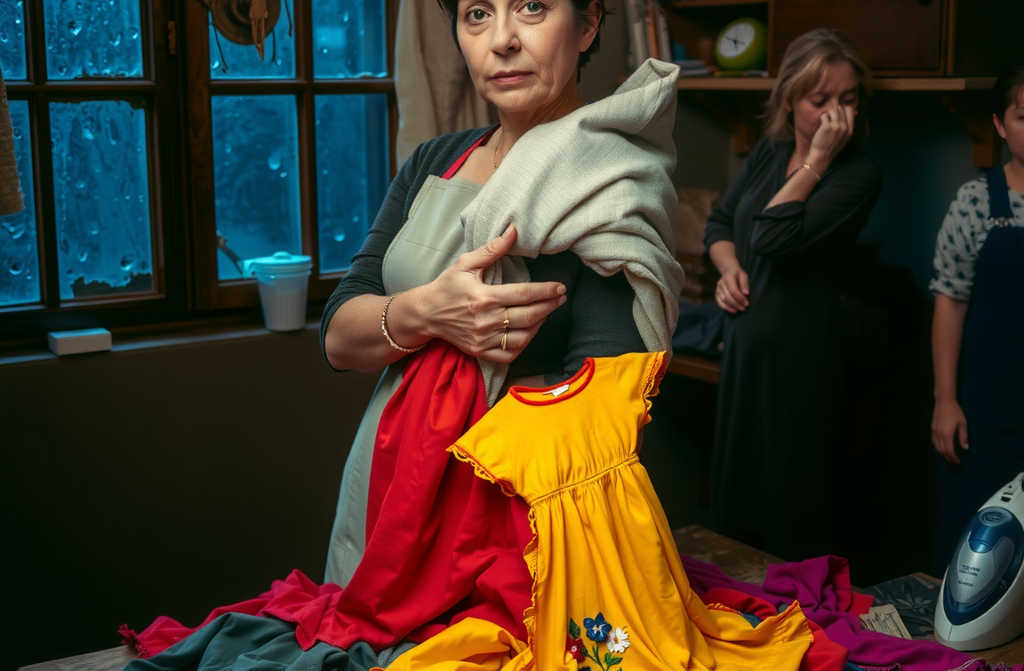
When Anne tugged on the twine that bound the sack, the fabric loosened gradually, rustling softly. For a heartbeat the air was filled with the scent of dust, old canvas and something sweetlike a forgotten childhood memory that no one can quite recall. Instinctively, the two women leaned forward, as if they wanted to see but were afraid at the same time.
Anne said nothing. With a single swift motion she spread the sacks edges and turned it upside down. A cascade of garments spilled onto the floorsmall, bright, painstakingly sewn, each one different. Dresses made of silk and cotton scraps, heavywool trousers, blouses in uneven stripes. Every piece had been fashioned from the remnants that others carelessly threw away.
Margaret covered her mouth with her hand. Lucy stepped back. In the silence only the tick of the wall clock and the gentle patter of rain against the window could be heard.
Anne lifted her gaze.
Perhaps youre wondering why I collected all this, she said calmly. Because nothing in life should be wasted. Every scrap can have purpose if someone is willing to give it meaning.
She bent down and picked up a tiny yellow dress sewn from three different fabrics. Along the hem delicate white and blue flowers were embroidered.
These clothes arent for me, she added quietly. I make them for the children at the orphanage in the woods. They own nothing. I wanted, even if only for a moment, for them to feel like anyone elsebeautiful, important, noticed.
The workshop remained still. Lucy swallowed.
The orphanage on the old country road?
Anne nodded.
Yes. Every month I leave a sack at the gate at night. I dont tell them who brings itdoesnt matter. What matters is that they have something to wear in the morning.
Margaret dabbed at the tears at the bridge of her nose. No one laughed any longer. In the corner a wisp of steam rose from an iron, like quiet smoke.
Anne continued, as if speaking to herself:
At first I only wanted to create something out of nothing. But when I saw those children standing by the fence, watching passersby, I realised it isnt the material that counts, but the warmth in the hands that stitch it together. Since then I havent thrown away a single scrap.
The women moved closer. Lucy brushed the small woolen jacket with its oversized buttons.
Its warm, she whispered. And so tiny maybe for a threeyearold?
For Ethel, Anne smiled for the first time. She has hair the colour of wheat. When she laughs, the world seems a little brighter.
No one asked how she knew the names.
From that day the workshop changed. Margaret began setting aside bits of fabric for Anne, Lucy brought ribbons and buttons, and even the old tailor from the next room contributed a box full of colourful thread. For your little princes and princesses, he said shyly.
Anne spoke little. She worked as alwaysquietly, precisely. Yet in the evenings, when the others had gone, she lit a single lamp and sewed. In the yellow glow only her hands could be seensteady, patient, sure.
Soon the workshop ceased to be just a place of labour. It became something elsea space where everyone learned that even rubbish could be turned into beauty, that kindness needs no grand words, only deeds.
One rainy Saturday the women drove together to the orphanage. It was the first time Anne was not alone. The children burst out into the yard, barefoot but smiling. When they hauled the sacks from the van, the little ones began to clap.
Margaret later said she had never witnessed such pure joy. Each child clutched their new clothing like treasure. A girl slipped a dress over an old jumper and twirled in the rain. A boy in an oversized coat laughed, declaring he now looked like a proper gentleman.
Anne stood at the back, silent, watching those small hands touch her work. Margaret noticed Anne had wiped away tears but said nothing. She understood.
When they returned to the workshop they were tired, drenched, but happy. Above the mirror someone had pinned a note:
From what others discard, a world can be built.
No one claimed the words, yet everyone knew the truth.
Since then, bags of donated fabric arrived from towns across the county. Sewingstudents from the local college came to help. At night, a single lamp glowed in the old buildings window, casting the silhouette of a woman still at her needle.
Years later, when the workshop moved into a renovated terraced house, a pencil scrawl was left on the old wall:
From remnants one can sew hope.
To this day, the children at the orphanage by the old lane wear Annes creations. Some bear uneven seams, faint fingerprintsreminders of hands that turned shame into dignity, silence into care, and scraps into love.
No one jokes about her sacks any more, because everyone now knows that each one holds not just cloth, but a heart capable of stitching the world anew.



A jászberényi diófa, amelyik hatszázezer forintot ért meg egy családnak
A jászberényi diófa, amelyik örökre megmentett egy udvart Negyedik éve dolgozom a jászberényi piacon zöldséges standnál, pont szemben azzal a...


Žentas, kuris liko: Birutės akys devynerius metus
Mane vadina nedėkingu žentu. Taip sako uošvienės draugės prie bažnyčios Pasvalyje, kai aš parvežu ją iš poliklinikos ir padedu išlipti...


האלמנה מרחוב הדקלים
היה סוף אוקטובר, בבאר שבע עוד נשבה החמסין המאוחר שחודר דרך כל בד, לא משנה מה לובשים מתחתיו. אני לבשתי...


Свекървата ми изхвърли дрехите, а мъжът ми мълчеше
Стоях във всекидневната с разкъсан найлонов плик до краката и гледах празния рафт в гардероба. — Къде е ризата ми...


Dvě stě padesát hodin, matko
Tereza seděla v kuchyni na sídlišti Lesná v Brně, byla půl čtvrté ráno, a za oknem svítila jediná rozsvícená lampa...


Konvice, co nikdy nevystydla
Jmenuji se Radka Bartošová, bydlím na sídlišti v Pardubicích, ve stejném paneláku už osmadvacet let, a naproti přes chodbu, ve...


מאה חמישים מטר על מגרש הכדורגל של בית הספר בעפולה
אני עובדת בבית הספר התיכון כבר שתים עשרה שנה, מזכירה במשרד המנהלת, ורואה הרבה דברים שהורים לא רואים. אבל את...


Il quaderno di ricette di mia suocera
Mi chiamo Massimo, ho quarantatré anni e faccio il ragioniere a Bergamo. Per dodici anni ho vissuto nella stessa palazzina...