
З життя
“She needs an apartment, a crutch, so you’ll drag her dead weight! Don’t you dare! Hear me? Her husband left – that means she’s a woman with a nasty streak. – I won’t give my blessing! – The mother screamed.”

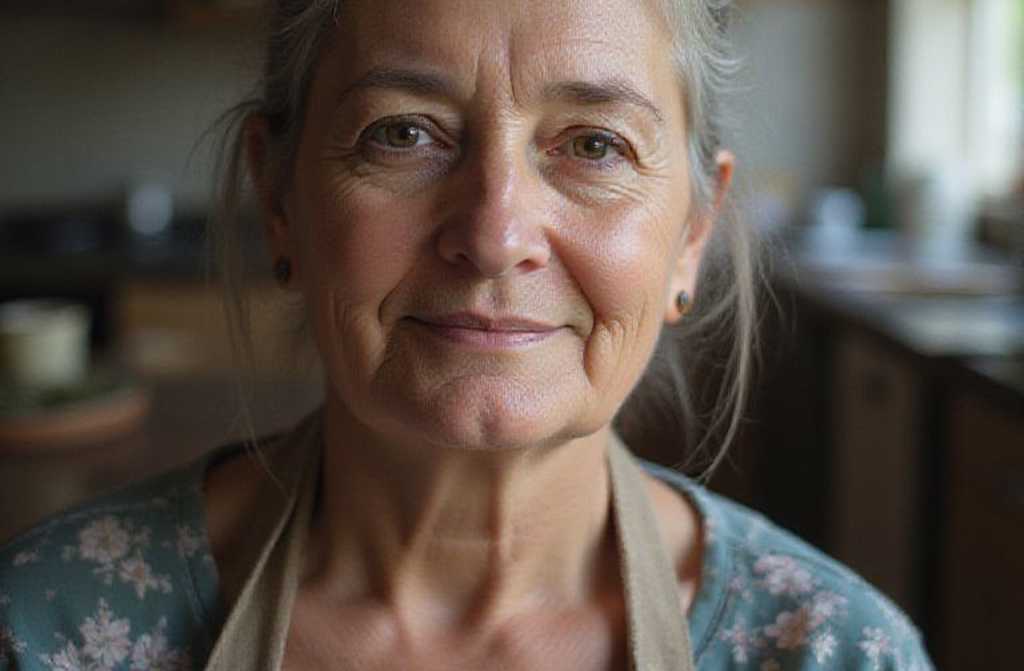
Andrew arrived home—to the small house on the edge of the village where his mother had lived alone since her husband died. He’d brought pasties from the market town and set them on the table. He sat for a while in silence. Then he said:
“Mum, I’m getting married.” He finally let it out.
Eleanor froze. Her heart gave a joyful leap: her son was thirty-two, tall, hardworking, a foreman at the sawmill—a proper man to be proud of.
She’d already pictured in her dreams a local girl coming into this house—maybe a Linda from the office, or Laura, the teacher’s daughter. From a good family. One of her own.
“Who is she?” she asked, wiping her hands on her apron.
“Charlotte. She’s from the town. Works as a nursing assistant at the hospital.”
Eleanor’s smile slipped. “Town… nursing assistant…” The words tasted bitter on her tongue.
“And her family? What sort of family?”
“She’s on her own, Mum. Her mother passed away, and she never knew her father.”
“Completely on her own?” Eleanor narrowed her eyes, sensing trouble. “How old is she?”
“Twenty-eight.”
His mother waited silently for the rest. She felt the hardest part was still to come. Andrew looked away and added quietly:
“She’s divorced. And she has a son—Daniel. He’s four years old.”
The kitchen turned airless. Eleanor slowly pushed back her chair, walked to the window, and stared at the empty garden for a long time.
When she turned back, her face looked carved from cold stone.
“What are you doing, Andrew? Have you no thought for your own blood? You’re your father’s only son, our hope. And you’re taking on a divorced woman with another man’s child?”
“He won’t be another man’s child, Mum. He’ll be mine.”
“He will not!” Her voice cracked into a shout. “Another man’s blood won’t turn into yours! She’s twisted you, you soft fool!”
“She needs a flat, a provider—you’ll be dragging someone else’s baggage on your back. Don’t you dare! You hear me? Her husband left her—that means she’s a woman with a bad character. I won’t give my blessing!”
Andrew stood up. He was pale, but in his calm there was a steel his mother had never noticed before.
“I’m getting married, Mum. You don’t have to come, you don’t have to love her. But this is my life!”
“Then don’t set foot in this house again!” she gasped, blinded by her own hurt. “I don’t need a son like that. Understood? I don’t!”
Andrew stepped towards her, wanting to hug her, but she pulled back as if he’d slapped her. He only said softly, “Forgive me,” and walked out.
The door closed, and Eleanor was left in her spotless, icy quiet. She watched through the window as her son’s car disappeared into the dust, and she wept—bitterly, from the unbearable pride she mistook for motherly love.
***
They registered their marriage in October. Grey sky, two witnesses, and a modest dinner in Charlotte’s cramped two-bedroom flat. When Andrew first walked in as a husband, a small, thin boy with frightened eyes met him in the hallway.
Daniel hid behind his mother’s skirt and stared at the big man warily, like a little animal.
“Hello, Daniel,” Andrew crouched down to his level. “I’m Andrew. We’re going to live together now.”
The boy was silent for a long time, then asked very quietly, “You… you won’t leave?”
“I won’t leave. I promise.”
The first year was like a long uphill climb. Charlotte worked shifts, Andrew laboured at the sawmill. Evenings, he picked Daniel up from nursery, fed him, learned to read fairy tales.
He’d been raised in sternness and didn’t know how to approach a child. But he simply stayed present. He carved little wooden cars, horses, and boats for him. Every morning Daniel found a new toy on the table. He took it silently, but would only sleep with it.
The ice broke in spring. Daniel fell seriously ill, temperature over forty. Charlotte was on night shift. Andrew sat by his bedside all night, changing compresses, spoon-feeding him water.
Towards morning, the boy opened his eyes, saw Andrew’s exhausted face, weakly pressed himself against his hand, and whispered, “Dad… don’t go.”
Andrew’s throat tightened. That night, the “other man’s baggage”, as his mother had called it, became dearer to him than anyone in the world.
Eleanor, over these years, turned into a living monument to her stubbornness. Neighbours brought news:
“Did you hear? Andrew has a daughter now—Grace! She’s the spitting image of him—dark hair, blue eyes.”
She only pursed her lips. “I have no son. I disowned him.”
She lived in the empty house, talking to her cat, and nursed her resentment like her only treasure.
Ten years passed. Andrew built his own house—large, with carved window frames. Daniel, now a teenager, helped him carry planks and lay bricks. Little Grace followed them like a shadow.
But Eleanor, in her old house, began to fail. Her legs gave way, her back hunched, and loneliness pressed heavier than any burden.
Trouble came in November. She went down to the cellar, her legs buckled, and she fell onto the cold earthen floor. An hour, two… Silence. Only cold and darkness.
She managed to crawl out and reach the phone. Who to call? Those she had turned away from? Pride still whispered, “Don’t you dare,” but fear of not surviving proved stronger.
“Andrew…” she croaked into the receiver.
Within twenty minutes he was there. He lifted her—small, frail—in his arms, and for the first time in ten years she felt his warmth.
The family came to the hospital. Eleanor lay on white sheets, afraid to open her eyes. When she did, she saw Charlotte.
She wasn’t looking hostile. She adjusted the blanket and fed her broth. Beside her stood tall, serious Daniel and little blue-eyed Grace.
“Grandma Eleanor,” Daniel said, looking her straight in the eye. “I’m Daniel. I know I’m not blood. But I’ll be your grandson, if you’ll let me.”
Eleanor looked at him—there was not a trace of resemblance to her husband or son, but in his gaze was that same male reliability she had always valued in her own men. The tears she’d held back for ten years finally broke through.
“I want to…” she whispered. “Forgive me… I’m a foolish old woman.”
The last five years Eleanor lived in her son’s house. She was no longer the “lady on the outskirts”. She became a grandmother.
She sat on the veranda, watched Daniel fix his motorcycle, and Grace recite poems. She often had tea with Charlotte, and one day she said quietly to her:
“You know, Charlotte… My Andrew wasn’t a fool. He turned out to be the smartest. You’re not a divorced woman—you’re a daughter to me. A real one.”
Eleanor passed away quietly in March, when the snow begins to melt. At the funeral, neighbours whispered:
“Look, in the end everything turned out well for them.”
And in the village, they still tell this story. About how kinship isn’t just a blood type on a medical chart. It’s when you sit by a sick child’s bedside at five in the morning.
It’s when you forgive ten years of silence. It’s when a stranger becomes the closest one, because love—it’s not in the veins, it’s in every day lived together. In the quiet, present, and faithful…
Do you approve of the mother’s actions? Share your thoughts in the comments and hit like!



A jászberényi diófa, amelyik hatszázezer forintot ért meg egy családnak
A jászberényi diófa, amelyik örökre megmentett egy udvart Negyedik éve dolgozom a jászberényi piacon zöldséges standnál, pont szemben azzal a...


Žentas, kuris liko: Birutės akys devynerius metus
Mane vadina nedėkingu žentu. Taip sako uošvienės draugės prie bažnyčios Pasvalyje, kai aš parvežu ją iš poliklinikos ir padedu išlipti...


האלמנה מרחוב הדקלים
היה סוף אוקטובר, בבאר שבע עוד נשבה החמסין המאוחר שחודר דרך כל בד, לא משנה מה לובשים מתחתיו. אני לבשתי...


Свекървата ми изхвърли дрехите, а мъжът ми мълчеше
Стоях във всекидневната с разкъсан найлонов плик до краката и гледах празния рафт в гардероба. — Къде е ризата ми...


Dvě stě padesát hodin, matko
Tereza seděla v kuchyni na sídlišti Lesná v Brně, byla půl čtvrté ráno, a za oknem svítila jediná rozsvícená lampa...


Konvice, co nikdy nevystydla
Jmenuji se Radka Bartošová, bydlím na sídlišti v Pardubicích, ve stejném paneláku už osmadvacet let, a naproti přes chodbu, ve...


מאה חמישים מטר על מגרש הכדורגל של בית הספר בעפולה
אני עובדת בבית הספר התיכון כבר שתים עשרה שנה, מזכירה במשרד המנהלת, ורואה הרבה דברים שהורים לא רואים. אבל את...


Il quaderno di ricette di mia suocera
Mi chiamo Massimo, ho quarantatré anni e faccio il ragioniere a Bergamo. Per dodici anni ho vissuto nella stessa palazzina...