
EN
The Violin That Knew Before She Did

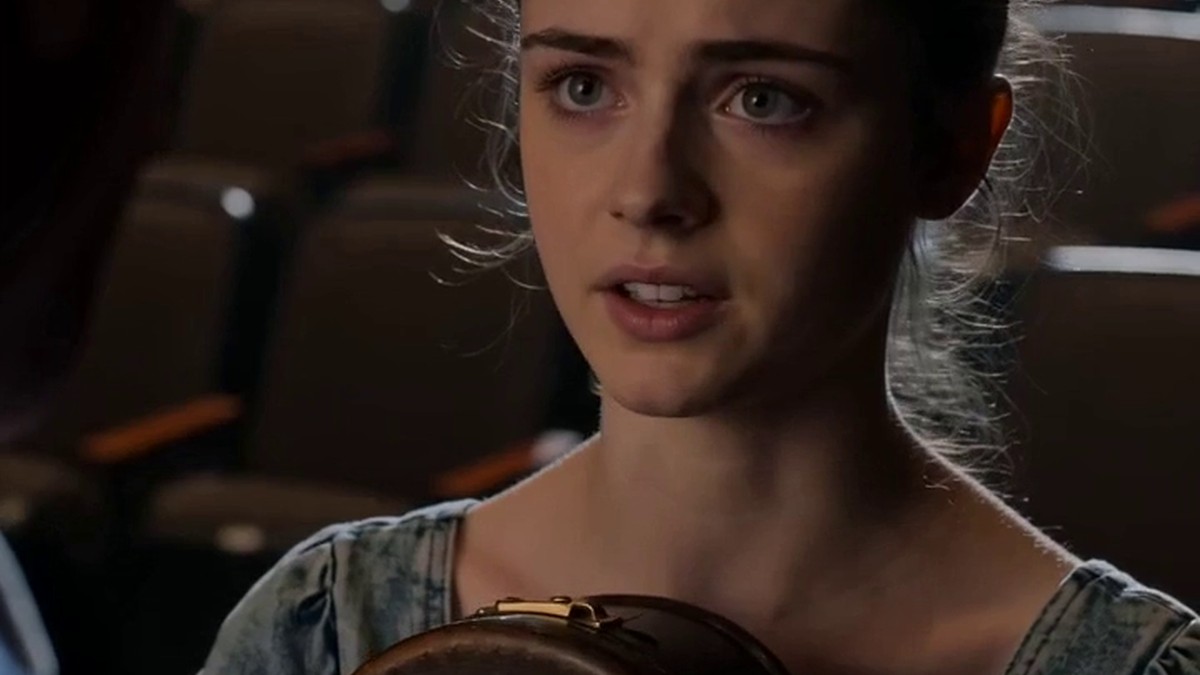
I was about to call for a break. Three hours of auditions, the same parade of flawless technique and four-thousand-dollar instruments—the kind of afternoon that makes you forget why you ever fell in love with music. The air in the Schermerhorn’s backstage hall had gone stale, a mix of floor wax and nervous sweat. One of the stagehands was eating a protein bar behind the curtain, the wrapper crinkling every thirty seconds. I poured the last inch of coffee from the green room carafe—Maxwell House, brewed sometime before noon—and looked at the clipboard with the remaining names. Through the loading dock door, propped open with a cinder block, I could see the afternoon sun hammering the asphalt of Fourth Avenue South. Nashville in July. The kind of heat that makes the air taste like a penny.
Then she walked out.
Not “walked” in the way a conservatory student does—chin up, spine straight, the measured stride of someone who’s been coached on stage presence since age nine. This girl moved like she was entering somebody’s living room, not a hall with twelve hundred seats and a television crew from PBS. Her dress was the color of denim that’s been through the wash too many times, and the violin case in her left hand looked like it had crossed the country on a Greyhound bus and spent a few decades in a damp basement. The leather edges were the color of old tea, rubbed white at the corners.
The contestant coordinator raised an eyebrow at me. I didn’t react. I’d learned, fifty-three years into this life, that the instrument tells you one story and the hands tell you another. I kept watching.
The girl set the case on the floor and opened it with the care of someone unwrapping a letter from a dead relative. When she lifted the violin, the light caught the grain of the spruce top—a honeyed brown, dull where decades of rosin had settled, but the varnish had the kind of depth that doesn’t come from a factory. I leaned forward. My coffee went cold on the armrest.
To my left, Amanda Simms—the youngest judge, a cellist with a platinum recording contract and opinions about everything—was already tapping her pen on the program. “That thing looks like a prop from a Civil War reenactment,” she muttered, just loud enough for me to hear.
I didn’t answer. Something about the scroll. The way the neck joined the body. A long time ago, I had seen a violin with a joint like that. In a rehearsal room in Lower Manhattan, on a winter night when the heat had failed and we’d played in our coats. The woman who owned it had laughed about the cold and said the only thing that mattered was getting the music out before it was too late.
The girl introduced herself. Lily Hammond, from Gas City, Indiana. The name didn’t ring anything. But the way she said it—like she was apologizing for taking up space—got under my skin. I’d heard that tone before. Thirty-one years ago. A dressing room in Berlin. The same self-effacing way from someone who had no business being modest.
She raised the bow.
The first note wasn’t impressive. A little thin, a little careful. Amanda stopped tapping her pen. The second phrase, though—something shifted. The sound opened, not loud, but present, the way a room changes when someone lights a candle. By the time she hit the middle of the piece, I had forgotten the clipboard, the coffee, the protein bar wrapper. She wasn’t performing. She was talking to someone she loved, and we were just overhearing it.
That’s when I stood up.
I didn’t plan to. My legs just unfolded. I walked to the edge of the stage, and the audience—who had been politely silent—started whispering. I heard someone in the back row say, “Is he supposed to be up there?”
“Miss Hammond,” I said, and my voice came out rougher than I intended. “May I see your instrument for a moment?”
She stopped playing. The silence was the kind you get right before a verdict. Her eyes, a pale gray, searched my face. Then, without a word, she handed me the violin.
I turned it over. The back was a single piece of maple, flamed like a tiger’s eye. I traced the purfling with my thumb, the inlay work so fine it could have been done with a needle. Then I tilted the instrument toward the light and looked inside, through the f-hole.
A handwritten inscription, brown ink bleeding into the spruce: *For the girl who plays jasmine into the wood. Nashville, 1991. —M. Cross.*
Madeleine had written that. Not a luthier’s stamp—a dedication in her own hand, tucked inside the instrument she’d played for ten years before she gave it away. I’d been there the night she wrote it. A late session at a studio on Music Row, the two of us cutting a Brahms sonata for a producer who kept asking for more whiskey. She’d borrowed a fountain pen from the engineer and said, *This one goes to my daughter someday. If I ever have a daughter.* I’d told her the ink would bleed. She’d said that was the point.
I felt my knees buckle. I put a hand on the piano to steady myself.
“Where did you get this?” I asked.
The girl blinked. “It was my grandmother’s. She gave it to me when I was seven.”
“And your mother’s name?”
She hesitated. “Madeleine.”
I turned to the audience. The cameras were on me, the red lights steady. I cleared my throat, but the words still came out cracked.
“Madeleine Cross was the finest violinist of her generation,” I said. “She played with the New York Philharmonic at nineteen, recorded the Sibelius concerto with Zubin Mehta, and then vanished from the public eye before she turned twenty-five. I knew her. I was her stand partner for two seasons.” I paused. The girl’s face had gone very still. “This is her violin. And you are her daughter.”
The sound that went through that hall was not applause. It was the collective exhale of twelve hundred people realizing they had just watched a secret get cracked open in real time.
Lily Hammond did not cry. She looked down at the violin, then back at me, and said, “She never told me.”
That one sentence had more grief in it than any funeral I’d ever attended.
We cleared the stage. Amanda Simms, who had been tapping her pen, was now sitting with her hands in her lap like a child who’d been caught stealing. I took Lily to a small room behind the green room, the one with the broken vending machine and a poster of Dolly Parton signed in silver Sharpie. Somebody brought water. She didn’t drink it.
“Why didn’t my grandmother—” she started, then stopped.
I waited. Outside the door, I could hear a production assistant arguing with someone about a release form.
“She said the violin was just an old thing from a flea market,” Lily said. “She said my mother loved music, but she was never a professional. She said it was better to be your own person.”
“She was right about that,” I said.
Lily’s eyes were dry, but her hands were gripping the violin case so hard the knuckles had gone white.
“Half the people in that audience now only care about my mother’s name,” she said. “Not my playing.”
“Half of them, yes. And half of them will remember what they heard before they knew. That’s the half that matters.”
A long pause. The vending machine hummed and shuddered, dropping a bag of chips nobody had asked for—$1.25 in flickering red digits on the display.
Then she opened the case and took out the violin again. She held it out to me.
“Can you tell me something about her? Something that isn’t in the biographies.”
I took the violin. The weight of it. The smell of rosin and old wood and the faintest trace of jasmine—Madeleine’s perfume, somehow still clinging to the lining of the case after all these years. I thought of a night in 1993, the two of us stuck in a Philadelphia hotel during a snowstorm, eating cheesesteaks from a foil wrapper and playing Bartók duets until the front desk called to complain.
“She believed,” I said, “that the only reason to play was to give the music to someone else. She said a note that stays inside you rots. You have to let it out, even if nobody’s listening.”
Lily looked at the violin for a long moment. Then she put it back in the case and fastened the worn leather straps. When she looked up, something in her face had shifted—not softer, but more settled, like a house after the foundation has been repaired.
“I want to finish my piece,” she said. “The one I was playing.”
We went back out. The audience was still there, buzzing. The cameras swiveled. Amanda Simms had fixed her lipstick. I sat down in my judge’s chair and picked up my pen, but I didn’t write anything.
She played again. This time, the first note was not careful. It was a statement. I don’t know if she played better than before—the human ear can’t measure those things—but the silence after the last note was the deepest silence I’ve ever heard in a concert hall. Not the silence of people waiting to clap, but the silence of people who have forgotten where they are.
I was the first one to stand. This time, I didn’t have to. I just did.
Afterward, in the lobby, a woman with white hair and a black cardigan was sitting on a bench near the coat check. She hadn’t come into the hall that afternoon—I realized that now—just waited here with a folded newspaper and a cup of tea that had long gone cold. When Lily walked over and put her head on the woman’s shoulder, I understood.
The grandmother caught my eye across the crowd. She didn’t quite smile. She made a small gesture with her hand, the kind that says *thank you for not making a mess of it*. Then she turned back to Lily and spoke, loud enough for me to hear.
“Madeleine died when you were two,” she said. “A car accident outside of Knoxville. She was driving home from a gig nobody even advertised. I raised you the way she asked me to—keeping the music close but the legend far away. She didn’t want you carrying her ghost before you’d found your own hands.”
Lily’s shoulders dropped, a tension releasing that had probably been there since childhood. She didn’t speak. She just pressed her forehead against her grandmother’s collarbone.
“We’ll get a waffle at that place on Broadway,” the grandmother said. “The one with the neon guitar.”
I watched them walk out into the Nashville night, the heat still ninety-one degrees rising off the pavement, the old case swinging from Lily’s left hand. By Monday, the story would be on every classical music blog in the country. Madeleine Cross’s daughter, found. The lost genius, explained at last—not a mystery, just a mother who’d made a choice.
I went back inside, took the old key ring from my pocket, and unlocked my own office in the back of the hall. On the shelf above my desk, behind a row of faded scores, there’s a photograph in a tarnished silver frame. I hadn’t looked at it in years. I took it down and wiped the dust off with my sleeve.
In the picture, two violinists are standing on a rooftop in Brooklyn. It’s 1994. The woman on the left is laughing, her hair falling out of its clip, a violin in one hand. The man on the right—me, about thirty pounds lighter and with a full beard—is trying to hold the camera steady. On the back, in a handwriting I’d recognize anywhere, it says: *Next time, you’re buying the cheesesteaks. —M.*
I set the photograph where I could see it and sat down at my desk. Outside, the neon guitar on Broadway flickered once, then steadied.



Кучето, което остана на верандата в Пловдив
Казвам се Веселина, на петдесет и осем съм и от единайсет години съм ветеринарен фелдшер в частна клиника на улица...


קופאית ברחוב ביאליק ותשעה מכתבים לאיתמר
זה קרה ברמת גן, בקומה השנייה של מרפאת "כללית" ברחוב ביאליק, בבוקר יום שלישי בספטמבר. אני עובדת שם קופאית כבר...


Pneuservis Marty Novákové, sto dvacet metrů od Vršovické
„Opakuju si to každý den: věk je v hlavě, tělo dělá, co mu poručím." Marta Nováková to říkávala už třicet...


Zelené fazolky v půl deváté
Máma zavolala ve středu v půl deváté ráno, zrovna když jsem se jednou rukou snažila dopít kávu, druhou hledala klíčky...


Nečekaný oběd
Bylo úterý jako každé jiné, když mi syn zavolal a řekl, že chce, abych za ním v poledne přijela do...


Il treno che mio suocero ha lasciato arrugginire a Civitavecchia
Mi chiamo Renzo Bassani, ho cinquantotto anni, e per ventidue anni ho lavorato come macchinista sulla linea che da Civitavecchia...


Гаражът на Стоян
Костадинка Илиева навърши шейсет и три години в понеделник, а във вторник снаха ѝ Милена смени патронника на входната врата,...


Řeka pod Krkonošemi, kde Jitka splnila poslední slib
V den, kdy by Pavel Novosad oslavil devětapadesátiny, stála Jitka Bártová na břehu Labe kousek za Špindlerovým Mlýnem a v...