
EN
The Six AM Omelets and the $184,000 Bedroom

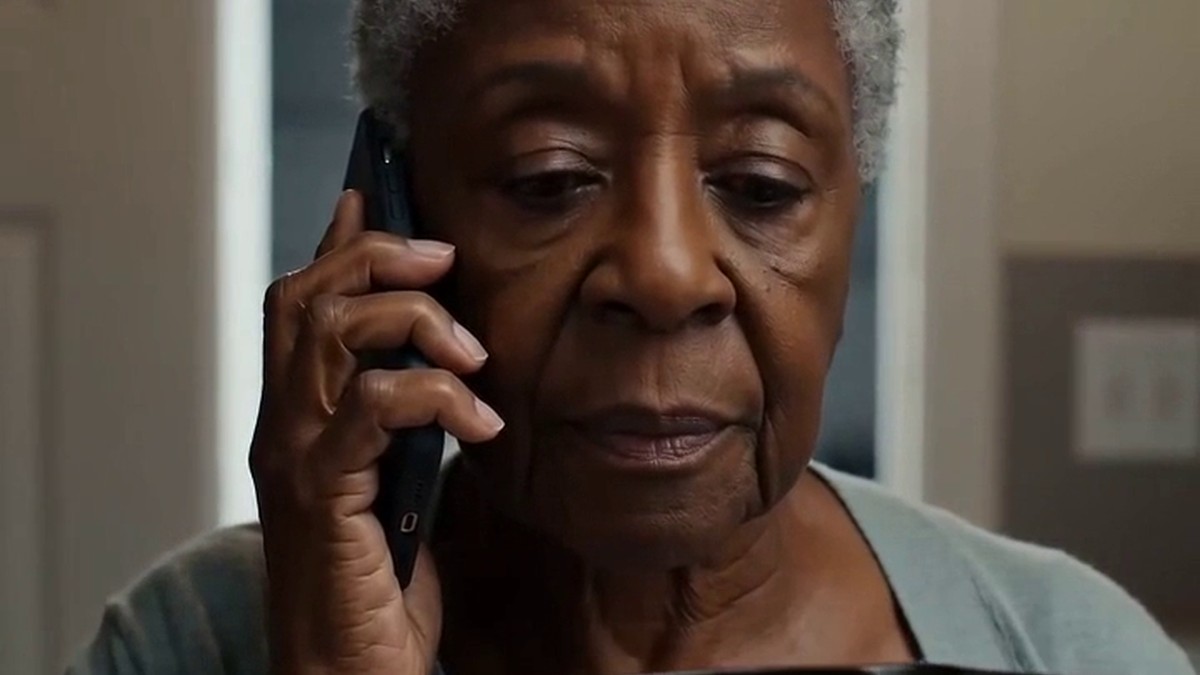
The idea had sounded so sensible over Sunday dinner. My son Marcus explained it while passing the roasted potatoes. Sell the old family house in St. Louis, split the proceeds between him and my daughter Renee, and I would move into his place. No lawyers, no probate court, no tax mess later. Just family handling things the way family should.
I was seventy-four years old. I had spent forty-one years doing alterations at a dry cleaner on South Grand, then another decade hemming prom dresses and patching work uniforms from my kitchen table until my fingers couldn't hold a needle steady anymore. The house on Arsenal Street was the only thing my husband Walter left behind when his heart gave out two years earlier in the middle of a Cardinals game. Three bedrooms, one bathroom, a porch swing he had hung himself in 1987.
The house sold in eleven days. Marcus drove me to the title company on a Tuesday morning, and I signed where the notary pointed. All of it. One hundred and eighty-four thousand dollars after closing costs. Half to Marcus, half to Renee. I kept nothing.
The first month at Marcus's place in Kirkwood was fine. His wife Dana set me up in the room their youngest boy had used, twin bed against a wall still covered with dinosaur decals. She brought me coffee every morning. The grandkids came in to say goodnight before bed. I told myself I had done the right thing, that this was what families did, that I was lucky to have them.
Then the small things started.
Marcus asked if I could pick up the kids from school because Dana had a meeting. Then it was, since I was already cooking for myself, why not cook for everyone. Then laundry. Then the grocery runs, because I had the time and they had the work schedules.
By the third month I was getting up at five-forty every morning to make breakfast before the kids left for school. I cleaned the house twice a week. I ironed Marcus's work shirts. I did the grocery shopping with my own pension money because Dana kept forgetting to leave me cash for it. Somewhere in there I noticed the difference between being part of a household and being the household.
One afternoon I sat on the edge of that bed with the dinosaur decals and added it up in my head. I was working more hours in that house than I ever had at the dry cleaner. The difference was, at the dry cleaner somebody paid me every two weeks. Here I got a "thanks, Mom" from the couch while Dana scrolled through her phone, and a place to sleep under a grinning stegosaurus.
I tried calling Renee. She had moved to Denver the year before, and the phone rang four times before voicemail picked up. Her text came through an hour later: Can't talk now, weird day, call you tomorrow.
She didn't call tomorrow. Or the day after.
I tried talking to Marcus one evening after Dana went out to see her sister. He sat across from me at the kitchen island, still in his work clothes, rubbing his forehead the way his father used to do when a bill came in that we hadn't planned for.
"I know I've been helping a lot," I said carefully. "I'm happy to contribute, but I feel like maybe we should talk about what this looks like in the long run."
He didn't cut me off this time. He just sat there, and then he said something I didn't expect.
"Mom, the kids are getting older. Tyler wants his room back. And Dana's feeling… it's a lot, having another adult in the house all the time. We were thinking maybe you could look into a senior apartment. Something small. I'm sure Renee could help with the deposit."
Renee didn't pick up when I called that same night. When she finally called back three days later, she told me the money was gone. Her half of the house had gone to paying off her credit cards, a new car after her old one died on I-70, and first and last month's rent on a nicer place in Boulder. She couldn't help with a deposit. She could barely cover her own groceries, she said.
I didn't yell. I didn't cry. I sat on that single bed in the room with the peeling dinosaur stickers and watched the streetlight outside the window. A crack ran across the ceiling from the corner to the light fixture, and I traced it with my eyes maybe a hundred times that night.
The next morning I took the bus to the senior services office in Clayton. The woman at the desk was friendly, younger than Renee, and she told me I qualified for subsidized housing. The waitlist was eleven months long.
"You might want to start writing to the places on this list now," she said, sliding a printed sheet across the desk. "The faith-based ones sometimes move faster."
I wrote to six places. I called three of them every other week, leaving messages that never got returned.
When Marcus told me they needed the room for good, I called a woman from St. Elizabeth's parish who had been widowed three years before. She had a basement studio in her house in Webster Groves, she said, and she usually rented it to students. She could give it to me for five hundred a month if I paid cash every first of the month and didn't mind the cat.
I moved out on a Saturday morning while the whole family was at Tyler's soccer game. I left the bed stripped, the sheets folded at the foot, and a note on the kitchen counter that said, "Thank you for having me." I didn't leave an address.
The studio was a converted furnace room with a bathroom in the corner and a tiny electric burner in a cutout nook. The window looked out at a retaining wall and the neighbor's trash cans. The landlady's cat liked to sit on the step outside my door, a fat orange thing with one cloudy eye, and I started buying him treats from the dollar store.
I found work again. Not sewing—my hands couldn't handle it anymore—but three mornings a week at St. Elizabeth's food pantry. It paid twelve dollars an hour and gave me something to get dressed for. Between that and my Social Security, I paid my rent on time and had enough left for groceries and the nine-fifty bus pass every month.
Marcus called every Sunday at six in the evening. The calls lasted four or five minutes. How are you, how's the place, the kids are doing great, busy at work, okay talk soon. A checklist with my name at the top.
Renee sent text messages with heart emojis. They came on holidays and sometimes on random Tuesdays. I love you Mom! Miss you!
Neither of them ever mentioned the money. Not once. I used to think that was the strangest part, but after a while I stopped expecting it.
The thing I actually couldn't let go of was the skillet. It was a cast-iron skillet that had belonged to Walter's grandmother. I had cooked Sunday breakfast in that skillet for thirty years. It went to Marcus's house when I moved, just like everything else I owned. And when I left, I forgot to ask for it back. Just walked out with my suitcase and my sewing kit and the little wooden cross that hung in the kitchen.
I thought about that skillet a lot in the basement studio. I would stand at my little electric burner making eggs in a cheap nonstick pan from Aldi, and I'd think about the seasoning on that old iron, the way an egg slid off it without any oil if you got it hot enough first.
One Sunday in October, I took the bus out to Kirkwood. I didn't call first. I just went.
Marcus answered the door in sweatpants, and I watched his face cycle through three different expressions in three seconds.
"Mom? Everything okay?"
I didn't step inside. I said, "I came to get my grandmother's skillet."
He looked over his shoulder into the house, toward the kitchen. "Now? I could bring it to you sometime."
"No," I said. "I'd like it now. Please."
He went in and came back a minute later holding the skillet wrapped in a dishtowel. I took it and unwrapped it right there on the porch. It was rusty. Not badly, but there was a ring of orange rust around the handle and one spot on the cooking surface. Somebody had put it through the dishwasher.
I looked at that rust for a long time. Then I wrapped it back up and held it against my chest with both arms, the way you hold a bag of groceries in the wind.
"The seasoning's ruined," I said.
Marcus said, "What?"
"Somebody washed it in the dishwasher. The seasoning is ruined. You can't do that to cast iron."
He stood there in the doorway with the same expression he'd had as a kid when he got caught doing something wrong. His hand came up and rubbed the back of his neck.
"Mom, I'm sorry. It was probably me. I didn't know."
I said, "I know you didn't."
Then I turned around and walked back down the driveway to wait for the bus. When I got home, I set the skillet on a folded towel by the bed. The next morning I went to the hardware store and bought a can of steel wool, a bottle of oil, and a roll of paper towels. I paid nine dollars and sixty-three cents.
I scrubbed the rust off the iron in the little bathroom sink. Took me an hour and a half. Then I rubbed the whole thing down with oil and heated it on my electric burner until the room filled with that smell of hot metal and hot oil. I did that three times that day and two more the next.
On the third day, I cracked an egg into that skillet. It slid around like a coin on glass.
The landlady's cat was sitting on the step outside my door when I came out. I bent down and scratched him behind the ear, and he leaned into my hand with that one cloudy eye fixed on me. I gave him a piece of egg white, and he ate it out of my palm.
That evening my phone buzzed. Renee, sending a series of heart emojis.
I typed back: I'd like to be paid back. My half of the house.
She didn't respond for two days. Then: I don't have it, Mom. You know that.
I typed: Then you can pay what you can, when you can. I'm not asking for it all at once.
No response. But three weeks later, a money transfer showed up in my checking account. Forty dollars. The note said, "For the house money."
It comes now every month, sometimes forty dollars, sometimes twenty-five. I don't know if she'll ever get anywhere close to half of what she owes. But the payments keep coming, and I keep the receipts in a manila folder under my bed. I write the date and the amount on each one in pencil, neat columns, the way I used to write my hours at the dry cleaner.
Marcus hasn't sent anything. I haven't asked.
Some nights I stand at my little burner and cook eggs in Walter's grandmother's skillet, and I count what I lost against what I have left. The numbers don't balance. I already know they never will.
But the skillet seasons better every week now. The surface is getting darker and slicker. And on Sundays, when Marcus calls to check his box, I answer the phone and listen to him talk about the kids. I don't tell him about the skillet. I don't tell him I still keep the closing statement from the title company folded in my nightstand drawer, the number one hundred eighty-four thousand dollars circled in pencil, the same pencil I use for the folder of receipts.
I haven't been back to St. Elizabeth's for Mass since I moved, only for my shifts at the pantry. Maybe I'll go back to sitting in a pew there someday. Maybe not.
The next time somebody invites me to a family dinner and starts talking about simplifying things, I will finish my coffee, push back from that table, and walk out the front door with my skillet under my arm. I will keep walking until I am home.
And I will never sign my name to a piece of paper again without taking it to the public library first, sitting down under the green lamp at the long oak table on the second floor, and reading every single word on that page three times with my glasses on.
Most mornings now I crack an egg into that skillet before the sun is all the way up, and it slides across the black iron without catching once.



Behind Every Empty Chair
I never planned to become the villain of my own family, but that's exactly what happened somewhere between my father's...


Мיה, זוללת ורודה בין החברות
— אנחנו טסים, ואת תיקחי את אמא של בעלי־לשעבר. תוך שעה החלפתי את המנעולים, מחר בעשר בבוקר אני מביאה לך...


Antonietta e la Porta dei Sogni Traditi
— Partiamo domani, e tu ti prendi la madre malata del mio compagno. Fra un'ora cambio le serrature. Alle dieci...


Az élet ára – 2 700 000 forint, amit Andrea sosem kap vissza
Andrea Vámos harminchat éves állatorvos volt, aki hét évig élt Kovács Zoltánnal, mielőtt a férfi egy huszonnégy éves kozmetikuslány, Petra...


La lettre du général
L’audience traînait depuis deux heures quand mon père a lissé le revers de sa veste avec ce geste précis qu’il...


The Six AM Omelets and the $184,000 Bedroom
The idea had sounded so sensible over Sunday dinner. My son Marcus explained it while passing the roasted potatoes. Sell...


Куверт за петдесет лева
Стоянка отброи банкнотите на кухненската маса и ги подреди като карти за игра — една до друга, ъглите изравнени. Петдесет...


La Hipoteca de la Hermana Era Mía
Miren, yo nunca quise ser el malo de esta historia. Trabajo diez horas diarias en un taller de hojalatería en...