
EN
The Night I Set Four Plates

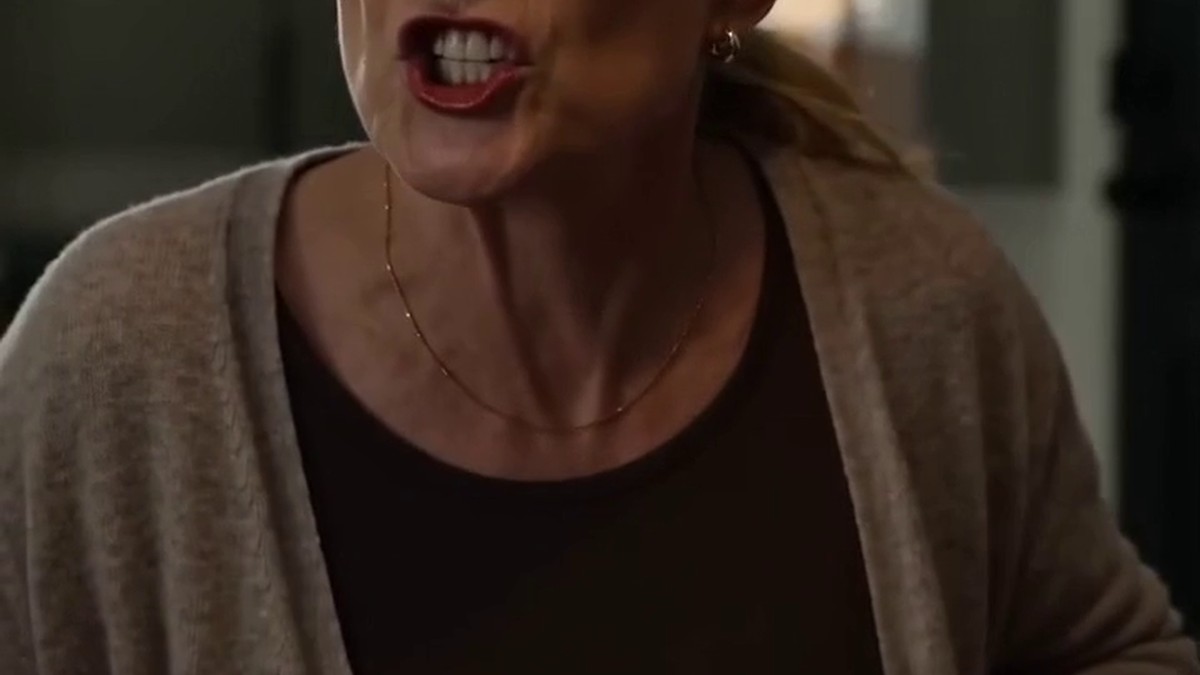
The thing about Patricia was that she didn’t just criticize—she performed. Every Sunday dinner at our house in Tallahassee was her stage. I’d spend four hours on my feet, and she’d spend four seconds tearing it apart while my husband Greg stared at his phone.
That particular Sunday, the air was thick with the smell of garlic and rosemary. I’d made lasagna from scratch—three layers of fresh pasta, béchamel I’d whisked until my arm ached, ground beef from the good butcher on Monroe Street.
Patricia lifted her fork. She dragged it through the corner of the square I’d placed in front of her. The motion was slow, deliberate, like a prosecutor presenting evidence.
She chewed once. Twice. Her face didn’t change because she’d already decided the verdict before she walked in.
“Soggy,” she announced.
Silence fell across the dining room. My two boys, Leo and Mason, stopped kicking each other under the table. Greg’s thumb froze mid-scroll. My stepsister-in-law Chloe—Patricia’s daughter from her second marriage—set down her wine glass with a little smirk she thought I couldn’t see.
“The pasta’s soggy, Natalie. You’d think after eleven years in this family you’d learn how to boil water properly.” Patricia pushed the plate back exactly two inches. “Chloe, don’t eat that. You’ll get food poisoning.”
Chloe’s smirk widened. “I told you last week, Mom. She can’t cook. It’s like she’s allergic to salt.”
I opened my mouth. The words I always said were right there—*I’m sorry, I’ll do better next time*—but something in my chest had finally snapped. Eleven years of Sunday roasts returned with a list of improvements. Eleven years of birthday cakes that were “too dry” and holiday turkeys that were “too bland.”
Greg hadn’t looked up from his phone.
“You know what?” Patricia straightened her napkin like she was closing a board meeting. “I’m done. From now on, we’re eating separately. I’ll cook my own meals. I’ll use my own shelves in the refrigerator. My groceries are mine. My Social Security check isn’t subsidizing whatever this is.”
She waved her hand over the lasagna like it was a crime scene.
Chloe practically clapped. She’d been angling for her mother to move in with her for years—not out of love, but because Patricia’s pension was the only steady income in her household. This little tantrum was perfect leverage.
I stood up slowly. Everyone expected tears. An apology. A desperate plea to keep the family together.
Instead I said, “Okay.”
Chloe’s smirk froze.
“From this moment on,” I said, “we eat separately. Your groceries, your shelves, your meals.” I picked up Patricia’s untouched plate. “I’ll just wrap this up for Greg’s lunch tomorrow.”
—
The following Friday, I knew exactly what was coming.
Patricia expected a full surrender. Every Friday night, our house turned into a free restaurant for her entire side of the family—Patricia, Chloe, Chloe’s deadbeat boyfriend Derek, their two kids who treated our leather couch like a trampoline. They’d eat, critique, and leave me with a sink full of greasy dishes and a half-empty bottle of wine they’d brought but somehow taken home again.
That afternoon, I went to Publix. I bought four chicken breasts. Four potatoes. Enough salad greens for exactly four people.
At seven o’clock, the doorbell rang.
Chloe came in first, holding two empty Tupperware containers. Not a dish to share—containers to take food home in. Patricia followed, already complaining about traffic on I-10. Derek shuffled in last, immediately turning on the TV.
They settled around the dining table. Expectant. Entitled.
I brought out four plates.
I set one in front of Greg. One at my place. One for Leo, one for Mason.
That was it.
Patricia stared at the empty space in front of her. Her lips moved soundlessly for a moment, like a fish pulled onto a dock.
“Excuse me,” she finally managed. “Where’s ours?”
I tucked my napkin across my lap and picked up my fork. “You said we were eating separately, Patricia. Your dinner’s on your shelf in the fridge. You labeled the shelf yourself. I didn’t touch it.”
Chloe’s chair screeched backward. “Are you kidding me right now? My kids are starving!”
“Then you should probably feed them.” I cut into my chicken. Juices ran clear onto the plate. The rosemary hit the air.
“Greg!” Patricia’s voice cracked like a whip. “Are you going to let her talk to us this way?”
Greg’s fork hovered in midair. He looked at his mother. At me. At his mother again.
He opened his mouth.
I set my fork down with a deliberate clink. “Greg, if you want to feed your mother, the kitchen’s right there. I’m not stopping you. But I’m nobody’s line cook anymore.”
He stared at me. I’d never used that voice before—the one that didn’t ask permission, didn’t apologize, didn’t hedge. The voice of a woman who’d done the math on eleven years and decided she was done paying interest on someone else’s emotional debt.
He closed his mouth.
Patricia stood up so fast her chair tipped backward. “You’ll regret this. You think you run this house? I put the down payment on this place. You’d be in an apartment in Crawfordville if it weren’t for me.”
Chloe grabbed her kids by the arms. Derek finally looked away from the TV, confused about why he wasn’t getting fed.
They left. Patricia’s threats echoed in the hallway. Something about never coming back. Something about lawyers.
The front door slammed.
Mason, who was eight, looked at me with big eyes. “Mom? Are we in trouble?”
“No, baby.” I reached over and ruffled his hair. “Grandma’s just learning a new rule.”
—
That night, Greg found me in the kitchen loading the dishwasher.
“She’s still my mother, Nat.”
I closed the dishwasher and turned around. “And I’m still your wife, right? Not just the woman who washes her sheets and cooks her meals and absorbs her insults so you don’t have to hear them?”
His jaw tightened.
“Eleven years, Greg. Eleven years of Christmas mornings where I cried in the bathroom before coming out to open presents because I knew nothing I did would ever be good enough for her. Eleven years of Chloe treating me like the help. Where were you during all of that?”
“That’s not fair.”
“You were scrolling.” I said it quietly, which made it worse. “You were always scrolling.”
He didn’t have an answer.
—
Two days later, Patricia came back. She’d texted Greg that she wanted to “make peace.” I was sitting at the kitchen island when she walked in, my phone face-down on the granite.
“I’m recording this conversation,” I said before she could sit.
She laughed. “Go ahead. I’m not afraid of you.”
For about three minutes, she made a decent show of it. Then the mask slipped.
“Let me tell you something, Natalie. I didn’t want Greg to marry you eleven years ago, and I was right. You’ve been a burden on this family since day one. I’ll make sure he wakes up. I’ll make sure he knows what you really are. When I’m done, you and those kids will be out of this house so fast your head will spin. This house is mine.”
She kept going. I let her. Every poisonous word, every threat, every admission of exactly what she thought of me—the phone on the counter caught it all.
When she finally ran out of steam and stormed out, I sent the recording to Greg at work. No commentary. No context. Just the file.
He came home three hours early. His eyes were red-rimmed, and he stood in the doorway like a man who’d just watched the foundation of his childhood crack straight down the middle.
“I didn’t know,” he said.
“You didn’t want to know.”
He flinched. Then the doorbell rang again, and everything hit the fan at once.
Patricia burst in with Chloe right behind her, both of them screaming before they’d even cleared the threshold. They demanded Greg choose. Right now. His wife or his mother. The ungrateful daughter-in-law or the woman who gave him life.
Greg walked past them. He stopped in front of me—shoulders squared, facing his mother and sister like a human shield.
“Enough.”
The word landed like a slap. Patricia’s mouth hung open. Chloe’s eyes went wide with the dawning realization that her backup had just switched sides.
“My wife,” Greg said, his voice shaking but steady, “will never be humiliated in her own home again. Not by you. Not by anyone. If someone has to leave this house tonight…”
He paused. I could feel his whole body trembling.
“…it won’t be her.”
Patricia went pale. The color drained from her face in a wave, leaving behind something hollow and old. “You would throw out your own mother? After everything I sacrificed for you?”
“No, Mom.” Greg’s voice broke, but he didn’t step back. “I’m saving the family I built. That’s not the same thing.”
The screaming that followed brought the neighbors out into the hall. Somebody called 911 thinking it was a domestic disturbance. A patrol car showed up fifteen minutes later, two officers looking thoroughly unimpressed with the whole situation. Patricia tried to spin it—her son had been manipulated, her daughter-in-law was unstable—but the cops had heard a hundred versions of this story before. They escorted her and Chloe out with polite, practiced efficiency.
—
The lawsuit came a month later. Patricia sued for a share of the house, claiming her down payment gave her partial ownership. But there was no contract. No promissory note. No signatures. Her name wasn’t on the deed. When Greg had bought the house eight years earlier, Patricia had given him the cash as a gift—she’d even bragged about it at a Christmas party, in front of a dozen witnesses who remembered it clearly.
Her case was dismissed with prejudice. She couldn’t refile. It was over.
—
A year passed. Real peace settled into our home like it had always belonged there. No more Sunday performances. No more Friday raiding parties. Greg started looking up from his phone. Leo and Mason stopped walking on eggshells in their own living room.
Our daughter was born in April. We named her Raina.
On Greg’s birthday that November, the doorbell rang at six o’clock. I opened it without checking the peephole, and there she was.
Patricia stood on the porch in a beige cardigan that had seen better decades. Her hair was grayer. The sharp angles of her face had softened into something tired. In her hands, she clutched a box of cheap grocery-store chocolates—the kind that come in waxy paper cups, two for five dollars.
“I came to wish Greg a happy birthday,” she said. Her voice had none of the old command. “Can I come in?”
Greg appeared beside me. He looked at his mother for a long moment—not with anger, not with longing, but with the quiet sadness of someone who’d made peace with a loss a long time ago.
“Mom.” He shook his head slowly. “You’re the one who said we should eat separately from now on.”
She opened her mouth. Nothing came out.
“The same goes for the rest of our lives,” he said.
He closed the door gently. No slam. No final speech. Just the soft click of the latch sliding into place, and behind us the sound of our children laughing at something on the TV.
On the other side of the door, there was silence.
I leaned into Greg’s shoulder. He pressed his lips to the top of my head, and we stood there for a minute, listening to the quiet we’d earned.



Puchýř pod malíčkem Boženy Kovářové
Tmavá, vlhká noc koncem srpna. Božena Kovářová se probudila ve dvacet minut po jedné, protože ji na pravém chodidle tak...


Жената от третия етаж на улица „Пирин“
Казвам се Весела и от три години работя като нощна портиерка в блок на улица „Пирин“ в Пловдив — стар...


Il frigorifero di mio cognato e i cinquemila euro che non torneranno
Mi chiamo Dario Ferraris, ho quarantatré anni, faccio l'elettricista a Bergamo da quando ne avevo diciannove. Questa storia la devo...


Dvi šunų lizdai Nr. 9 ir nuotrauka, kuri sustabdė furgoną
Mano vardas Audrius Vaitkus, man šešiasdešimt treji, ir jau vienuolika metų savanoriauju Kauno rajono gyvūnų prieglaudoje, netoli Garliavos. Mačiau visko....


A jászberényi diófa, amelyik hatszázezer forintot ért meg egy családnak
A jászberényi diófa, amelyik örökre megmentett egy udvart Negyedik éve dolgozom a jászberényi piacon zöldséges standnál, pont szemben azzal a...


Žentas, kuris liko: Birutės akys devynerius metus
Mane vadina nedėkingu žentu. Taip sako uošvienės draugės prie bažnyčios Pasvalyje, kai aš parvežu ją iš poliklinikos ir padedu išlipti...


האלמנה מרחוב הדקלים
היה סוף אוקטובר, בבאר שבע עוד נשבה החמסין המאוחר שחודר דרך כל בד, לא משנה מה לובשים מתחתיו. אני לבשתי...


Свекървата ми изхвърли дрехите, а мъжът ми мълчеше
Стоях във всекидневната с разкъсан найлонов плик до краката и гледах празния рафт в гардероба. — Къде е ризата ми...