
З життя
My 6-year-old daughter saw her twin brother walk into the abandoned house across the street – but we had buried him three months ago.

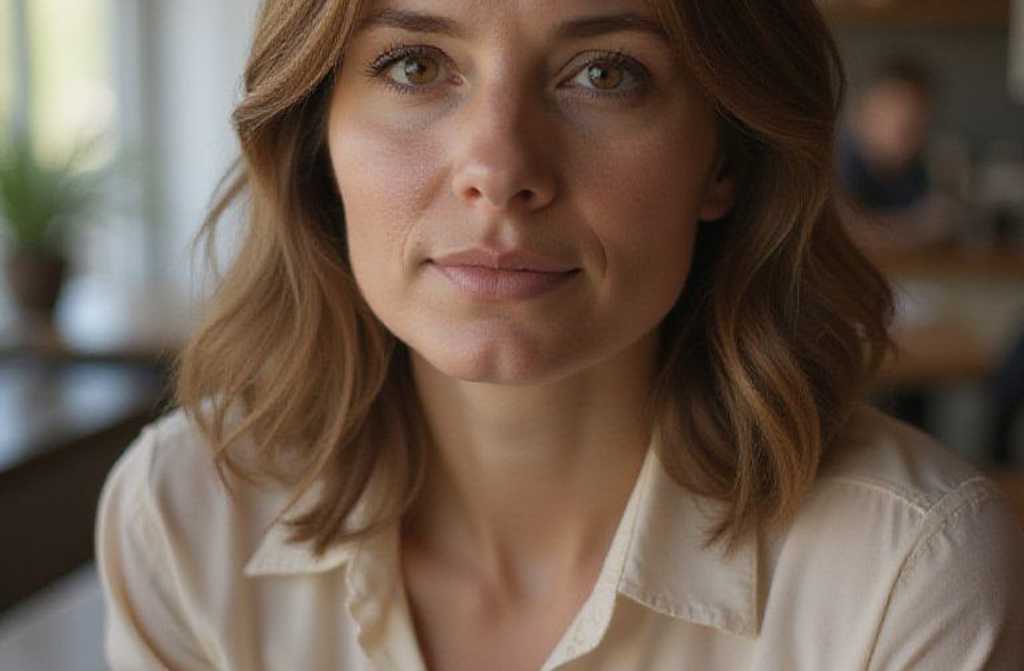
Twelve years after I buried my three-year-old daughter, I saw her alive in a café. She walked home, called my ex-husband’s new wife “Mum,” and showed the one mark no stranger could know. I know how it sounds. I thought grief had finally cracked my mind in two. Then the little girl turned her head, and I saw the teardrop-shaped birthmark on the nape of her neck.
Every night I used to kiss that spot when Sophie was small. “This is my favourite place in the whole world,” I whispered. Twelve years ago, I left town for a three-day work conference. He called after midnight. “It’s only three days, Claire,” he said. “Stop worrying.” Then he called again after midnight. “Sophie has a fever,” he said. “We’re taking her to hospital.” An hour later, another call. “I’m Dr Helen,” she said. “Come home as fast as you can.” By the time I got back, Mark told me Sophie was dead. I was sedated, shattered, stupid with grief. I let him decide everything. He said I wouldn’t want that to be my last memory of her. He said the doctors strongly advised against me seeing her. He said the coffin had to stay closed. A few months later, Mark left me for that same doctor, Helen. And now, twelve years later, a little girl sat in front of me with Sophie’s birthmark, alive.
I stood across the street, shaking so hard I had to wrap both arms around myself. She came out of the café, crossed two quiet roads, and turned into a neighbourhood with tiny front gardens. She stopped at a pale blue house with white trim. The little girl opened the gate and called out, “Mum, I’m home.” Helen smiled at her and said, “How was school, Lily?” I didn’t sleep that night. I kept seeing the birthmark. I kept hearing in my head: “Mum, I’m home.” The next afternoon I rang Mark. “Claire?” “I saw Helen yesterday.” He asked too quickly: “Where did you see her?” “Why are you calling?” I said nothing. Mark cleared his throat. “Why are you calling?” “You have a daughter,” I said. “How old is she?” Then he said, “Claire, don’t do this to yourself.” That was enough. The next day Lily came in again. She sat at the same table and stirred her drink three times to the right before drinking. When she got up and left, she threw away her straw. I waited until she was gone, then took it out of the bin and sealed it in a plastic bag. That night I paid a private forensic lab to compare the DNA from the straw with my own. They warned me the result wouldn’t be admissible in court—only an investigative lead.
While I waited, I searched for Helen. I found a reference on an old hospital charity page to the tragic loss of her young daughter around the same time Sophie supposedly died. Then the DNA result came. A calm-voiced woman said, “Ms Bennett, the sample strongly supports a biological parent-child relationship.” I thanked her as if she’d confirmed a dentist appointment. I sent the report, the obituary, and the screenshots to my sister and a solicitor before doing anything else.
Someone let me grieve for a living child. When she saw me outside the children’s ward, all the colour drained from her face. “Claire,” she said. “What are you doing here?” She said a mix-up in emergency transfers had swapped Emma’s and Sophie’s files. Emma died that night. Sophie survived. And Mark and Helen were already having an affair. After I buried Emma under Sophie’s name, they kept the lie going because it was convenient. The hospital made the first mistake. They made every decision after that. Mark discovered the swapped files before I got there and told Helen they could fix it after my funeral. When she asked about me, about my flat, about why I wasn’t coming, that hurt more than the false death certificate, the closed coffin, even the affair. “And what did you tell her?” I asked. “That you abandoned her.” They didn’t just take my daughter. They taught her I had left her. “We changed her first name when we moved.” I stood up so fast my chair scraped. “You let her believe I left her?” “At first I thought we could fix it,” Helen said. “Then too much time passed. We moved. Lily started school. It seemed impossible.” “Lily?” “We changed her first name when we moved. Mark thought it would mean fewer questions.” Whatever happens next, I won’t force another identity on her. “She has to be told. With professionals present.” Helen shook her head. “She’ll hate me.” Mark wouldn’t look at me. “You could have thought of that when she was four,” I said. “Or six. Or ten.”
My solicitor contacted social services and requested an urgent protection assessment. Before Lily arrived, I spoke to Mark in the presence of my solicitor and a caseworker. “You said I wouldn’t want my last memory of her to be a hospital room,” I said. “Then you made sure I had no new memories for twelve years.” “We gave her a stable life.” “Claire, I know how this looks.” “You know what you did.” He said it happened fast, Helen had lost Emma, Sophie was confused, they thought they were buying time. I told him he hadn’t lost control for one night. He’d made the same choice every day for twelve years. “Yes, and you should have taken proper care of her. That makes it worse.” After that he had no answer.
Lily came in looking annoyed. The next afternoon we met with a caseworker, a trauma therapist, and a court-appointed family officer. Mark and Helen brought Lily. The room had beige walls. “Why am I here?” The therapist said, “Lily, we need to talk about serious questions regarding your family and your identity.” Helen couldn’t look at her. Lily stared at Helen. “Mum?” Lily’s face hardened. “What did you do?” No one answered fast enough, so I did. The therapist showed her the preliminary DNA report. “My name is Claire Bennett. There is strong evidence I am your biological mother.” Lily laughed once. “No.” Mark tried first. “It was complicated.” He turned to Lily. The swapped files. The affair. They spilled everything. Then Helen continued. Emma’s death. The swapped files. The affair. “We thought we were protecting you.” The decision to keep lying. The move. The name change. When Helen said, “You were born Sophie Bennett,” Lily went still. No one could give an answer that didn’t sound monstrous. “From whom?” Lily whispered. Then she looked at me. “I didn’t leave you,” I said. “I didn’t give you away. I came home for you.” Her eyes filled with tears. The therapist touched Lily’s arm and asked if she wanted a break. Then she looked at Mark and Helen. “You let me believe she didn’t want me.” The room fell silent.
Mark tried once more. “We loved you. We gave you a good life.” Lily stared at him with open disgust. “You gave me a fake one.” The family officer stepped in. The police were notified, and social services opened an urgent case. The court suspended Mark and Helen’s unsupervised contact. Lily didn’t go home with Helen that night. She stayed with Helen’s sister, Ruth, who had been abroad when Emma died and knew nothing about the swap. The court issued an emergency order recognising that Sophie’s death certificate was likely false.
The next morning, two hospital security guards met Helen outside the children’s ward. She handed in her badge in the same corridor where she’d called twelve years of lies an accident. The medical board suspended her licence while pursuing permanent revocation. The court-ordered DNA test confirmed what the straw had already said. Sophie Bennett was alive. The state struck her name from the death registry. Emma’s name was restored to the grave. Sophie was legally recognised as my daughter, though Lily asked the court to keep using the name Lily for the transition period. I supported that. Mark and Helen took Sophie from me. I wasn’t going to take Lily from herself.
She didn’t suddenly become Sophie again. The first weeks after the truth came out were messy and painful. Lily didn’t run into my arms. She didn’t call me Mum. She was angry at everyone. One day in therapy she said, “I don’t know who my mother is.” The therapist asked, “Would you like to choose?” Lily said, “No. I want everyone to stop deciding things for me.” That was the first time I heard her claim herself.
A week later, during a supervised visit at the park, she asked, “Did I really stir my drink like that when I was little?” “You always stirred everything three times. Even soup.” “You noticed that?” “You looked like you were about to cry in the café.” She looked down. “I don’t remember.” The question broke my heart all over again. “I know.” After a long silence she asked, “Did I ask about you?” “Helen said yes,” I replied. “At first.” Lily stared at the path. A few minutes later she turned to me and lifted her hair from the nape of her neck. “I don’t remember this either.” “You don’t have to.” “Did you really kiss it?” “Every night.” I leaned in and kissed the birthmark the way I did when she was three. She didn’t pull away. Then she said quietly, “I’m not ready to call you Mum yet.” “You don’t have to,” I said. “Only when you want.”
That night I went to the cemetery. The state had removed Sophie’s name from the grave. Emma had been buried there for twelve years without her own identity. I brought a rose and said her name out loud.
Seven weeks later, Lily texted me for the first time. A picture of a maths problem. Under it she wrote: “Can you help with number six?” I stared at the message. She still didn’t call me Mum. Then I rang her, and we argued about algebra for twenty minutes. When we finished, she said, “Text me when you get home.” She still didn’t call me Mum. But she reached out.



A jászberényi diófa, amelyik hatszázezer forintot ért meg egy családnak
A jászberényi diófa, amelyik örökre megmentett egy udvart Negyedik éve dolgozom a jászberényi piacon zöldséges standnál, pont szemben azzal a...


Žentas, kuris liko: Birutės akys devynerius metus
Mane vadina nedėkingu žentu. Taip sako uošvienės draugės prie bažnyčios Pasvalyje, kai aš parvežu ją iš poliklinikos ir padedu išlipti...


האלמנה מרחוב הדקלים
היה סוף אוקטובר, בבאר שבע עוד נשבה החמסין המאוחר שחודר דרך כל בד, לא משנה מה לובשים מתחתיו. אני לבשתי...


Свекървата ми изхвърли дрехите, а мъжът ми мълчеше
Стоях във всекидневната с разкъсан найлонов плик до краката и гледах празния рафт в гардероба. — Къде е ризата ми...


Dvě stě padesát hodin, matko
Tereza seděla v kuchyni na sídlišti Lesná v Brně, byla půl čtvrté ráno, a za oknem svítila jediná rozsvícená lampa...


Konvice, co nikdy nevystydla
Jmenuji se Radka Bartošová, bydlím na sídlišti v Pardubicích, ve stejném paneláku už osmadvacet let, a naproti přes chodbu, ve...


מאה חמישים מטר על מגרש הכדורגל של בית הספר בעפולה
אני עובדת בבית הספר התיכון כבר שתים עשרה שנה, מזכירה במשרד המנהלת, ורואה הרבה דברים שהורים לא רואים. אבל את...


Il quaderno di ricette di mia suocera
Mi chiamo Massimo, ho quarantatré anni e faccio il ragioniere a Bergamo. Per dodici anni ho vissuto nella stessa palazzina...