
З життя
‘The kid’s been begging for a dog for ages,’ the man said. A week later, a puppy turned up at the bus stop.

The man chose the puppy the way you might choose a present that has to last a lifetime. The breeder smiled.
“My lad’s been dreaming of a dog for months,” he said, adjusting his grey jacket with the worn cuffs.
In the pet shop he scooped kibble into a clear bag, lifted a lead with a padded handle from the display, and set a stainless-steel bowl on the counter. He never once asked what any of it cost.
The puppy was ginger, one ear set a touch higher than the other. Three months old, give or take. When the man picked him up, the puppy pressed his nose into the broad palm and went completely still.
The man held him against his chest, a carrier bag swinging from his free hand, and the shop door swung shut behind him.
Charlie was waiting at home on the sofa. Seven years old, knees covered in sticking plasters, blond hair standing out in three directions. When his dad walked in with the tiny miracle in his arms, the boy didn’t shout. He slid down onto the floor, crouched, and held out his fingers.
The puppy sniffed his hand. Then licked it.
Charlie lifted his head and looked up at his father. There was something in that look which made Wendy turn to the window without a word. She stood by the sill, shoulders a fraction too high, like a woman who had been braced for a trick all along.
“What shall we call him, then?” Gary asked.
His son answered quietly, without taking his eyes off the puppy.
“Rusty.”
His father ruffled his hair. Wendy never turned around.
The first night was rough.
Rusty whimpered in the hallway, scratched at the lino, pressed his muzzle against the closed bedroom door. Wendy got up at three. Then again at five. She mopped the puddle with wet sheets of newspaper, and they squelched under her bare feet until the whole corridor felt steeped in something that didn’t have a name yet.
Gary didn’t get up once.
In the morning the kitchen smelled unfamiliar.
“He’ll settle,” Wendy said into the air.
Her husband spread butter on his bread in silence. The knife grated across the crust, and under the table the puppy flinched all over.
In the daytime Charlie sat on the floor of his room, and Rusty lay beside him, chin resting on the boy’s knee. Charlie read from his ABC book aloud, tangling the letters, and the puppy listened as if every word made sense. The uneven ears twitched at each new sound.
Wendy paused in the doorway and watched. Then she pulled the door quietly shut behind her.
On the second night Rusty wrecked a pair of slippers. On the third he tipped over the rubbish bin. Gary picked potato peelings off the floor on all fours, his jaw muscles working as though he were chewing something invisible and bitter.
“Right, well…” he started. And stopped.
Wendy waited for the rest. It never came.
The argument broke out on the fifth day.
Charlie had been asleep for a good while. The clock on the kitchen wall said quarter to ten.
Gary sat at the table, sleeves of his grey jacket rolled to the elbows.
“I’m not sleeping enough,” he said.
Wendy stood at the sink.
“Bear with it a little. He’s small.”
He leant forward.
“Wendy. I’m up at six. Every single day. If that dog…”
He didn’t finish. Wendy filled in the rest for herself. Her hand went for the tea towel, even though her fingers were bone dry.
From the hallway came a whimper. Low. A single note. As if Rusty had caught the scent that he was the one being talked about.
“The lad dreamed of this dog,” Wendy said.
Gary stood up. The chair scraped the floor.
“I’m not talking about now. I’m saying: if nothing changes.”
He walked into the bedroom. He didn’t slam the door. He shut it carefully, the way a man does when his mind is already made up and the conversation was only there for appearances.
On Saturday morning Charlie woke up and ran over the cold lino to Rusty, barefoot.
The mat in the hallway was empty. The bowl by the wall was clean, no food and no water. The lead with the padded handle still hung on its hook.
The boy looked under the table. In the bathroom. Behind the wardrobe, where Rusty liked to hide the chewed slipper. Nowhere.
He walked into the kitchen.
“Dad, where’s Rusty?”
Gary was drinking coffee. The cup was steady in his hand.
“Must have run off. The door was open this morning when I put the bins out, and then…”
He spread his hands. Broad, calm palms. The very palms the puppy had trustingly pushed his nose into six days earlier.
Charlie stood there. He looked at the empty mat. At the lead hanging dead straight on its hook, as if it had never once been taken down. Then he went back to his room.
He didn’t cry. He didn’t ask again. He just went.
Wendy stood in the doorway, pressing her fingers to her lips, like somebody trying to catch a word that had come too late. Behind the fridge sat a clear bag of puppy food, half full, the pet shop’s price sticker still stuck to the side.
That same evening, Tamsin was walking home from the market.
The rain had started in the afternoon, and the tarmac gleamed like oil.
Something was stirring by the bench at the bus shelter.
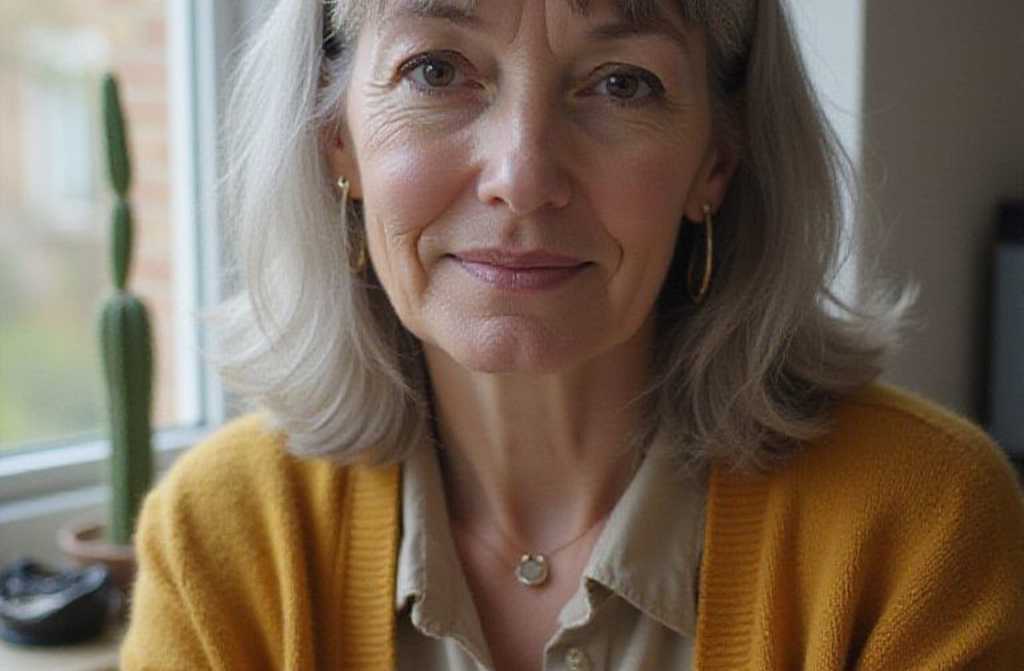
Tamsin stopped. She straightened her mustard-coloured cardigan and bent down. Her hands were marked with dark stains from the seed trays: end of April, and fingers don’t come clean until summer.
A puppy. Ginger, one ear a little higher than the other. Soaked, pressed hard against the leg of the bench, trembling in short rapid shudders, like a machine with no off switch.
Beside him was a bag. Clear, with food. New, price tag still on.
Tamsin straightened up. Looked around. Nobody.
The rain got heavier. Drops beat on the shelter roof like someone drumming their fingers, growing impatient. The puppy didn’t shrink deeper. He didn’t whine. He was done waiting.
Then he lifted his muzzle. Cold nose, fur stuck to thin ribs. His eyes made something ache under Tamsin’s ribs too, even though she hadn’t wept in front of anyone for twenty years and wasn’t going to start now.
“Well, look at you,” she said, slowly. The way people talk when they’re used to speaking to seed trays, and to silence.
She lifted him with one hand. Took the bag with the other. The puppy pressed his nose into her wrist and went still, just as he had gone still before, in somebody else’s hands. Rain streamed over the cardigan, over the bag, over the ginger fur. The bus never arrived, and it no longer mattered.
At home Tamsin rubbed him dry with a blue-striped towel. The puppy sat calmly on a stool and watched her warm milk in a battered little aluminium pan.
The flat was quiet. A single cactus on the windowsill. A pendulum clock her husband had repaired a month before he died.
Eight years she had lived alone. And then milk sloshed across the floor, claws clicked on the tiles, and it wasn’t quiet any more – it was peaceful. A world of difference.
The puppy lapped from a saucer. The noise was so full of home that Tamsin sat down on the floor beside the stool and simply listened.
“Good boy,” she said. A pause. And again: “Good boy.”
Three days later, Tamsin took the puppy out into the yard.
She’d bought the lead at the hardware shop for a couple of quid. Webbing, with a plastic clasp. The puppy didn’t mind: he tottered around the yard, sniffing every lamppost, as though mapping out a new world.
At the entrance, Audrey from the fourth floor was smoking. She squinted at the sun, smoke curling upwards.
“Oh, got a dog, then?”
Tamsin shrugged.
“Found him. At the bus stop. Saturday, in the rain.”
Audrey took a drag, studying the puppy, then Tamsin.
“Ginger? With the ear?”
Tamsin nodded.
“That’ll be Gary from flat twelve. Got him for his boy, a week back. Wendy told Nell on the third floor that the dog had run off.”
Audrey lowered her voice.
“Only Nell says she saw a bloke in a grey jacket at the bus stop on Saturday morning. With a bag. Put something down by the bench and went. Fast. Never looked back.”
Tamsin was silent.
The puppy sat at her feet, gnawing on the lace of her trainer. Audrey stubbed her cigarette out in the bin and went in.
Tamsin stood there. Then she bent down, picked the puppy up, and pressed him to her cardigan. The mustard wool smelt of earth and seedlings. He didn’t whimper, just pushed his wet nose into her neck. Warm and damp.
In the evening Tamsin washed the saucer and looked out of the window.
Down in the yard, by the swings, stood a boy. Blond hair sticking up any old how. He wasn’t swinging. Just staring at the bench where the women of the block usually sat with their little dogs in the afternoon.
He stood for a minute, maybe two. Then he shoved his hands into his pockets and walked slowly back towards the entrance.
Rusty slept by the radiator on a bed made from an old blanket. One ear stuck up higher than the other.
Tamsin dried her hands. Set the towel down.
Somewhere in flat twelve, a lead with a padded handle hung on a hook. Brand new, from the pet shop. It had never been used. Not once.



A jászberényi diófa, amelyik hatszázezer forintot ért meg egy családnak
A jászberényi diófa, amelyik örökre megmentett egy udvart Negyedik éve dolgozom a jászberényi piacon zöldséges standnál, pont szemben azzal a...


Žentas, kuris liko: Birutės akys devynerius metus
Mane vadina nedėkingu žentu. Taip sako uošvienės draugės prie bažnyčios Pasvalyje, kai aš parvežu ją iš poliklinikos ir padedu išlipti...


האלמנה מרחוב הדקלים
היה סוף אוקטובר, בבאר שבע עוד נשבה החמסין המאוחר שחודר דרך כל בד, לא משנה מה לובשים מתחתיו. אני לבשתי...


Свекървата ми изхвърли дрехите, а мъжът ми мълчеше
Стоях във всекидневната с разкъсан найлонов плик до краката и гледах празния рафт в гардероба. — Къде е ризата ми...


Dvě stě padesát hodin, matko
Tereza seděla v kuchyni na sídlišti Lesná v Brně, byla půl čtvrté ráno, a za oknem svítila jediná rozsvícená lampa...


Konvice, co nikdy nevystydla
Jmenuji se Radka Bartošová, bydlím na sídlišti v Pardubicích, ve stejném paneláku už osmadvacet let, a naproti přes chodbu, ve...


מאה חמישים מטר על מגרש הכדורגל של בית הספר בעפולה
אני עובדת בבית הספר התיכון כבר שתים עשרה שנה, מזכירה במשרד המנהלת, ורואה הרבה דברים שהורים לא רואים. אבל את...


Il quaderno di ricette di mia suocera
Mi chiamo Massimo, ho quarantatré anni e faccio il ragioniere a Bergamo. Per dodici anni ho vissuto nella stessa palazzina...