
EN
The Horse That Wouldn’t Leave

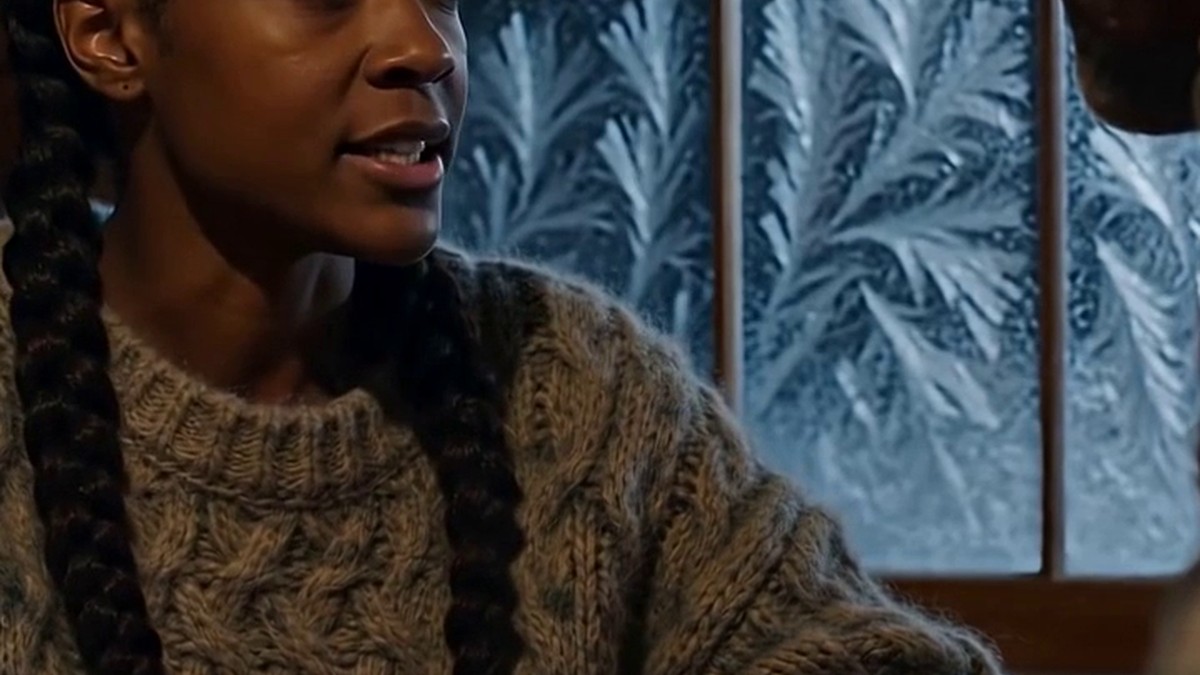
The first thing I remember about that winter was the quiet. Not the soft, pretty quiet people write poems about. The kind that sits on your chest at four in the morning when the temperature's dropped to twelve below and your fence line's buried under three feet of drift. That quiet.
I'd been up since before dawn, same as always. Coffee gone cold in the thermos, fingers numb inside gloves I should've replaced two winters back. My gelding, a paint named Rusty, was picking his way along the eastern boundary where the wind had carved the snow into waves you could drown in.
Then I saw it.
Not a branch. Not a shadow. A hand, sticking out of the drift like something reaching for help that never came.
I almost rode past. That's the truth. Cold does things to your judgment, makes you calculate odds you'd never entertain in July. But Rusty planted his feet, snorted twice, and wouldn't move another step. That horse has better instincts than most people I know.
I climbed down and dug with my bare hands because my gloves were too stiff to grip anything. Under the snow was a woman, maybe mid-twenties, wrapped in a coat so thin it might as well have been newspaper. Her lips had gone the color of a bruise. I pressed two fingers to her neck and counted to ten before I found it — a pulse, faint, but there.
No tracks anywhere. No camp. Nobody else. Just her, alone in a valley that would've buried her by nightfall.
I got my wool blanket around her and hauled her up onto Rusty, walking him back myself since there was no way she'd stay on that horse without me holding her. It took almost two hours to cover four miles. Twice I stopped to check if she was still breathing. By the time I saw my own porch light, my hands were shaking worse than hers.
Marta, my housekeeper, didn't ask questions. She started heating water, pulled dry clothes from the hall closet, put broth on the stove. She's been with our family since my parents died in '09, and she's seen enough Montana winters to know when a thing is life or death.
The girl was with us three days before she opened her eyes and knew where she was.
Her name was Ayana. She flinched when she first saw me — strange man, strange room, the smell of woodsmoke and horses. I kept my hands where she could see them, kept my voice low, told her my name, told her she was safe. Eventually her breathing settled.
She said she'd been traveling through the mountains with her family, looking for a safer route north. The storm hit faster than anyone expected. She got separated from them, walked until she couldn't feel her legs, and then everything went white.
I didn't push for details. She'd tell me what she wanted when she wanted. That's how my mother raised me — you don't interrogate someone you just pulled out of a snowbank.
By the second week, Ayana was insisting on helping around the place. I told her to rest. She wouldn't have it. She scrubbed the kitchen cleaner than it'd been in months, mended blankets, reorganized the pantry, and doctored a foal that had cut his leg on a downed wire, using some kind of poultice made from dried yarrow and something else I didn't recognize. That foal healed faster than the vet's antibiotics ever managed.
She knew animals. She knew land. She knew how to work without being told twice. I'd hired plenty of hands over the years for $16, $18 an hour, and none of them had half her sense for it.
Word got around the county fast, the way it does. A young woman, alone, staying out at the Carter place. Some neighbors stopped by with their "friendly advice" — you don't know her, Ethan, could be running from something, could have a husband looking for her.
I'd heard that talk before. Same talk my father got when he hired a hand from Chihuahua back in the eighties. Same talk when he leased grazing rights to a family up from Amarillo. I told my neighbors the same thing I always tell them: I don't measure a person by where they came from. I measure them by what they do. And what I'd seen Ayana do was outwork anybody on this ranch, me included.
She couldn't have missed the looks. The way Harv down at the feed store would go quiet when she walked in. The way his wife made her count out exact change before she'd ring up a two-dollar soda. Ayana never said a word about any of it. Just kept her head down.
But I started noticing things. She asked about a missing heifer before I'd even mentioned we had one. She knew which stretch of fence needed replacing just from watching how the cattle bunched up near it. She spotted hoof rot on a steer three days before the farrier confirmed it.
That's not just helpfulness. That's knowledge — deep, specific, a rancher's knowledge you don't pick up by accident.
One night, after Marta had gone home, we were at the kitchen table with coffee between us, and I asked her straight out: "What are you running from, Ayana?"
She went still — not scared-still, more like she was deciding whether I'd earned the truth yet.
Then she told me.
Her family hadn't gotten lost in that storm by accident. They'd been pushed into the mountains. Her father ran a beef operation up near the Oklahoma line, a little over a thousand acres of hard-scrabble grass, nothing fancy. A livestock outfit out of Dallas had been buying up land in that county for years, consolidating parcels. They'd made her father offers. He said no. The offers got less polite after that.
The winter before, somebody cut their fences at night and scattered the herd across forty miles. Took three days to round up half of them. The rest were never found. Then a fire in the hay barn that spring. Then a county notice saying their water rights were "under review."
Her father held out over a year. But when the bank called their loan early — a loan they'd never missed a payment on in six years — he knew he was out of road. He didn't have the money for a lawyer who could go up against a company that kept one on retainer, in a county where the judge played golf with their CEO on weekends.
So he'd loaded up what cattle he had left and pushed north through the mountains, hunting for land they could still afford, someplace off that company's map. That's when the storm caught them.
Ayana had been separated from her father and two brothers in the whiteout. Three days before I found her, she'd been walking in circles trying to find them again.
I sat with that for a minute. The coffee went cold in my hands.
"There's an old man been calling around the county the last couple weeks," I said. "Talking to every rancher between here and Silver Creek, asking if anybody'd seen a young woman traveling alone. Never gave a name — just said his daughter went missing in the storm. Sheriff's office passed the message along to half the ranches out this way, mine included. I didn't think much of it till just now."
She looked at me, hands pressed flat on the table. "You think that's my father?"
"I don't know. But it's worth a phone call."
The next morning I drove into town and used the phone at the sheriff's substation, since my own line had gone down in the storm. Deputy Hollis dug out the message slip — a name and a callback number for a motel in Silver Creek, eighty miles east. The name on the slip was Thomas Reece.
Ayana was standing behind me when I read it out loud. She grabbed the edge of the counter like the floor had moved.
I called the motel from that phone. The woman who ran the place confirmed it — Thomas Reece was there, alive, with two sons, had been for two weeks, going out every day in a borrowed truck to check ranches along the pass.
Then I called my cousin Mike, who works for the state agriculture department, and asked him to pull whatever he could on that Dallas outfit — liens, judgments, complaints. And I called a lawyer I knew from my rodeo days, a woman named Alice Vance who'd taken on a chemical company over a poisoned creek up near Choteau and won.
Then I put Ayana in my truck — a '09 Ford, two hundred and ten thousand miles on it — and we drove east.
Finding Thomas Reece outside that diner in Silver Creek is something I won't forget. He was a big man, but the winter had hollowed him out — looked like he'd aged ten years in a month. When Ayana got out of the truck, he just stood there like his eyes were lying to him. Then he ran. I've seen grown men cry. Never like that.
He tried to pay me right there on the sidewalk, pulled out a fold of bills — maybe two hundred dollars, everything he had left, probably — and tried to push it into my hands. I closed his fingers back over it.
"You've got a family to feed," I said. "We'll figure the rest out later."
Two months later, that company from Dallas backed off — but it wasn't quick and it wasn't cheap. Alice's retainer ran me $3,500 to start, and by the time it was done I'd put close to nine thousand into it, between her hours and Mike's records requests and two trips to Helena for paperwork. The company's lawyers didn't fold easy. They sent a letter threatening a countersuit for "tortious interference" that scared Thomas enough he almost told Alice to drop it. Two of my neighbors who did business hauling for that company stopped waving when they passed my truck on the county road, and one of them still doesn't.
What broke it open was Mike's records — a pattern going back six years, "voluntary sales" that lined up suspiciously often with fence-cutting complaints, barn fires, and water rights reviews on the seller's land. Seven separate incidents. Nothing that would've won a jury on its own. But Alice built the pattern into the deposition. She asked their land acquisition manager, on the record: "How many of the sellers you just named filed complaints with the sheriff's office within sixty days of signing?"
He didn't have a good answer. Neither did his lawyer, who asked for a recess and never really came back with anything better. Three weeks after that deposition, the county dropped the water rights review, and the bank sent Thomas a letter "re-evaluating" his loan and finding it, after all, perfectly satisfactory.
Thomas and his family ended up staying in the county. They bought a place twenty miles from my ranch, $340,000 for six hundred acres with a creek that runs year-round — a fair price, for once. Ayana runs the day-to-day now, and she's sharper at it than half the men in this county who've been doing it thirty years.
A few weeks ago, she came by with her brothers to help me reset some corral posts a storm had knocked loose. When we finished, she hung back while her brothers loaded tools into their truck.
"I've been thinking about that day," she said. "Why I went left at the fork instead of right. I've run the math on it more times than I can count. Right would've put me in the ravine — the one that iced over solid that night."
She looked down at her boots, scuffed the toe of one against a fence post.
"You found me at almost the exact spot I would've died. And that horse of yours just stopped."
I leaned on the rail and watched the light go orange over the ridge.
"Rusty's a good horse," I said.
She laughed. "That's it? That's what you've got?"
I didn't have a speech for her. I thought about the cold that winter, the neighbors and their whispers, Thomas's hands shaking around that fold of bills on the sidewalk in Silver Creek.
"I don't know why it worked out the way it did," I said. "I just know I'm glad it did."
She was quiet a second. Then she pulled a notebook out of her coat pocket, cover soft and creased from being carried around.
"I've been keeping track," she said. "The truck, the gas, what you covered of Alice's fee. It's all in here. I don't take charity. Never have."
She held it out. I didn't take it.
"Then don't take it as charity. Take it as an investment."
"In what?"
"Six years from now, once your place is running the way I know it will be, I'm going to need somebody to partner on a breeding program I've been chewing on. Consider that notebook the down payment on it."
She stood there working her jaw like she was chewing through five different arguments before she gave up and put the notebook back in her pocket.
"Six years," she said.
"Six years."
I've run that ranch alone since my folks died. I don't need a partner. But watching someone climb back from the edge the way she did — makes a man want to bet on something.
The snow's coming back soon; I can feel it in my knees before I feel it in the air. Tonight I'll lay out the heavy blankets, load the stove, check the heating elements in the water troughs. Same as every year.
Rusty's getting older. His joints stiffen up bad in the cold now. But he still goes out with me every morning, same patient walk along the fence line, still stopping sometimes for no reason I can see.
Last week I stopped by the feed store and watched Harv's wife ring up Ayana's soda without asking her to count out exact change first. Neither of them said anything about it. She just handed over the two dollars and walked out with her Coke like it was nothing.
Maybe it was nothing. Maybe it wasn't.



Dům uprostřed obchvatu
Bohumil Kraus měl na chalupě u Mělníka vinný sklep, tři jabloně a výhled na řeku, který mu jeho otec kdysi...


La casa in mezzo alla tangenziale di Prato
Renzo Bagnoli aveva sessantotto anni e una convinzione che nessuno, in quel quartiere alla periferia di Prato, era riuscito a...


הבית באמצע הכביש 6
אבשלום תורג'מן היה בטוח שהוא ניצח. זה קרה בשנת 2019, ליד קריית מלאכי. חברת נתיבי ישראל הגיעה אליו עם הצעה:...


Šuo, kuris atpažino Rimantą praėjus septyniems mėnesiams
Aš esu Rimanto žentas, ir kai jis persikėlė į „Ąžuolyno slėnio“ globos namus Panevėžyje, aš pats vežiau jo lagaminą į...


גור, מיטל ואחת עשרה השנים שאף אחד לא רצה לספור
אני זה שהחזיק את הרצועה כשאמא שלי הפסיקה לצאת מהבית. ככה זה נראה מבחוץ, ואני מבין למה זה נראה ככה....


רוני, תעשה בדיקות, זה לא ממני
רוני עצר לרגע עם הכף באוויר. "אמא, בבקשה, לא עכשיו." אבל אמא כבר לא שמעה אף אחד חוץ מעצמה. אני...


התור השלישי של אמא בשבוע
אמא התקשרה בשעה שבע ורבע בבוקר, בדיוק כשניסיתי לשפוך קפה לתרמוס ולהזכיר לבן שלי שיש מבחן בגיאוגרפיה. – דנה, את...


Nevěsta se přiznává těsně před oltářem
Kateřina Bártová si toho rána v Kutné Hoře myslela, že jí prsty od nervů upadnou od koronky, kterou pletla babička...